

The 2024 Netflix adaptation of Patricia Highsmith’s 1955 novel, The Talented Mr. Ripley, represents a definitive pivot in the evolution of modern crime television. Directed by Steven Zaillian and starring Andrew Scott, the series—simply titled Ripley—strips away the sun-drenched, saturated glamour of previous adaptations to embrace a stark, monochromatic aesthetic. By opting for a minimalist black-and-white presentation, Zaillian does more than merely mimic the era of the source material; he restores the film noir soul to a story that has long been miscategorized as a vibrant Mediterranean travelogue.
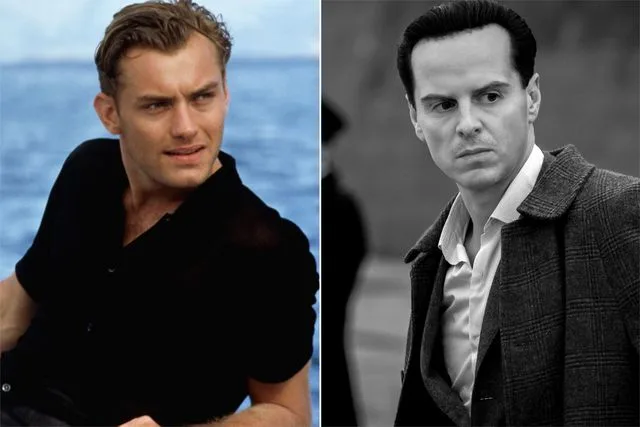
This version of Tom Ripley is not the lovelorn, tragic figure of Anthony Minghella’s 1999 film. Instead, Scott portrays a “negative space” of a man—an observer whose lack of inherent identity makes him a perfect vessel for the cold, calculating shadows of neo-noir. The series utilizes its eight-hour runtime to indulge in the “administrative details of criminality,” turning the mundane acts of forging signatures and moving bodies into high-tension, visual poetry.
The Chiaroscuro Influence of Caravaggio
One of the most profound departures in this adaptation is the thematic and visual parallel drawn between Tom Ripley and the Baroque painter Michelangelo Merisi da Caravaggio. Throughout the series, Ripley becomes obsessed with Caravaggio’s work, specifically his use of chiaroscuro—the dramatic contrast between light and dark. This is not merely a stylistic flourish; it is a narrative mirror.
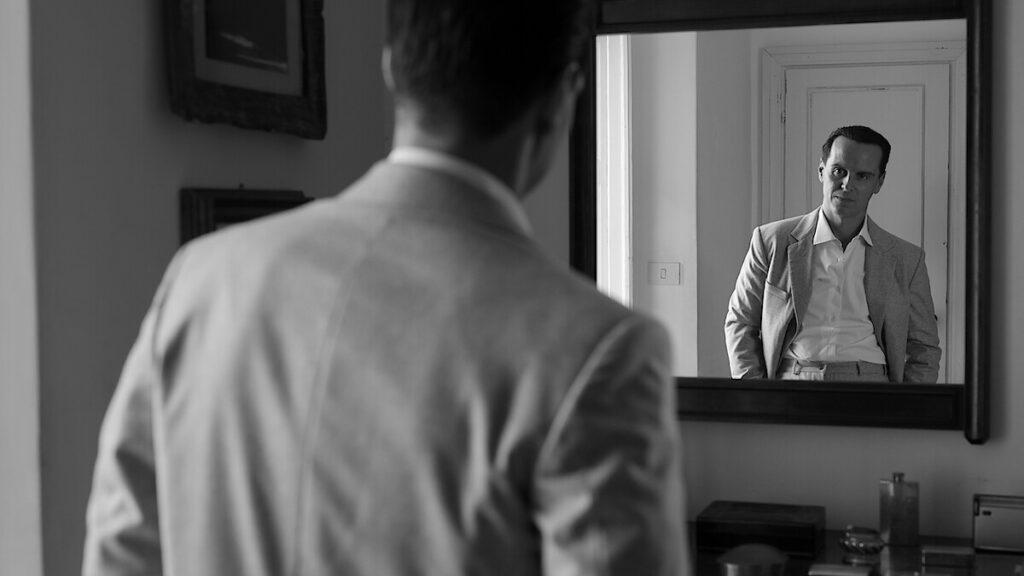
Cinematographer Robert Elswit, an Academy Award winner for There Will Be Blood, used the black-and-white palette to emphasize the texture of the Italian landscape—not as a postcard, but as a “graveyard” of ancient stone and deep shadows. The absence of color forces the viewer to focus on the geometry of the frame and the subtle shifts in Scott’s placid, yet terrifyingly alert, expression.
| Element | Anthony Minghella (1999) | Steven Zaillian (2024) |
| Visual Palette | Saturated, warm Mediterranean colors | High-contrast, minimalist black-and-white |
| Protagonist Tone | Charismatic, impulsive, and emotional | Cold, methodical, and sociopathic |
| Pacing | Cinematic, fast-paced thriller | Slow-burn, analytical crime essay |
| Primary Theme | Identity through tragic love | Identity through calculated theft |
Redefining the Noir Anti-Hero
The series succeeds in re-establishing the fundamental noir definition by focusing on the “inevitability of the fall.” While traditional noir often follows a protagonist’s descent into a seedy underworld, Ripley presents a protagonist who was born in that darkness and is merely attempting to colonize the light. Andrew Scott’s performance is a masterclass in stillness. He does not seek the audience’s sympathy; he demands their attention.
In this iteration, the “seedy underworld” is not a physical basement or a smoky jazz club, but the psychological interior of Ripley himself. The script, which famously spanned over 800 pages, allows for a meticulous exploration of the con artist’s process. We see the sweat on the brow, the weight of a suitcase, and the cold reality of a life lived through a series of “slippery masks.” This focus on the “worker” aspect of crime aligns with the gritty, hard-boiled traditions of Dashiell Hammett and Raymond Chandler, where the detective—or in this case, the criminal—is defined by their labor.
- Minimalist Composition: Zaillian rarely moves the camera, opting for fixed shots that feel like museum paintings.
- Psychological Claustrophobia: The wide-angle lenses used in tight Italian corridors create a sense of being trapped within Tom’s perspective.
- Shadow as Character: Light is used to obscure rather than reveal, keeping the protagonist’s true motives in the periphery.
The Minimalist Aesthetic as a Narrative Tool
The decision to shoot in black-and-white was initially met with skepticism by some critics who felt it might feel “pretentious” or distance the audience from the beauty of Italy. However, as the series progresses, it becomes clear that the monochrome serves as a filter for the truth. By removing the “distraction” of blue skies and colorful negronis, the show highlights the decay of the European aristocracy and the “moral rot” lurking beneath the marble statues.
This stylistic choice was inspired by a black-and-white photograph on the cover of Zaillian’s personal edition of the Highsmith novel. It serves as a visual correlative to the emotional state of the characters. According to an extensive interview with the Los Angeles Review of Books, this version is the first adaptation to truly depict the “unequivocal triumph of evil” that Highsmith intended. The minimalism isn’t just about what is on screen; it is about what is absent—the lack of empathy, the lack of remorse, and the lack of a true self.
A Legacy of Shadows
Ripley stands as a monument to the enduring power of noir aesthetics in the streaming era. At the 76th Primetime Emmy Awards, the series was recognized with 14 nominations, ultimately winning for Outstanding Directing, a testament to Zaillian’s uncompromising vision. It proves that there is still an appetite for high-brow, analytical storytelling that respects the intelligence of the viewer.
The series does not offer a “Final Word” on the character of Tom Ripley, as the character himself is an enigma. Instead, it offers a window into the “darkness of the Amalfi Coast” and the cold, hard logic of a man who would rather be a “somebody” through murder than a “nobody” through honesty. By embracing the minimalist constraints of 1940s cinema, Netflix has produced a definitive neo-noir masterpiece that will be studied for its craftsmanship for years to come.