

The premiere of Spider-Noir on the MGM+ linear channel, followed by its global debut on Amazon Prime Video, signals a fascinating mutation in modern television. Developed by co-showrunners Oren Uziel and Steve Lightfoot, the eight-episode series arrives at a cultural moment defined by severe caped-crusader fatigue. By stripping the traditional webslinger of his corporate polish and relocating him to a bleak, alternate 1930s Manhattan, the production executes a deliberate structural inversion. It shifts the paradigm away from colorful, universe-saving spectacle toward the grinding, localized labor of traditional crime fiction.
This iteration features Nicolas Cage as Ben Reilly, an aging, down-on-his-luck private investigator who abandoned his superhuman identity as “The Spider” years before the first frame rolls. The narrative functions less as a heroic origin story and more as an autopsy of a broken man dragged back into a corrupt criminal ecosystem. In doing so, Spider-Noir directly embraces the grim fatalism that defined early mid-century American pulp literature, proving that the roots of the detective genre remain a fertile ground for deconstructing contemporary pop mythology.
Authentic Monochromatic Aesthetics as Narrative Choice
One of the most audacious creative decisions of the series is its dual-format release, offering viewers a choice between a “True-Hue Full Color” master and an “Authentic Black and White” cut. Far from a mere gimmick or a post-production filter, cinematographer Darran Tiernan shot the project with the specific lighting constraints of classic monochrome in mind. The black-and-white presentation relies heavily on deep shadow composition, sharp geometric lines, and heavy silhouettes to build a tangible sense of psychological claustrophobia.
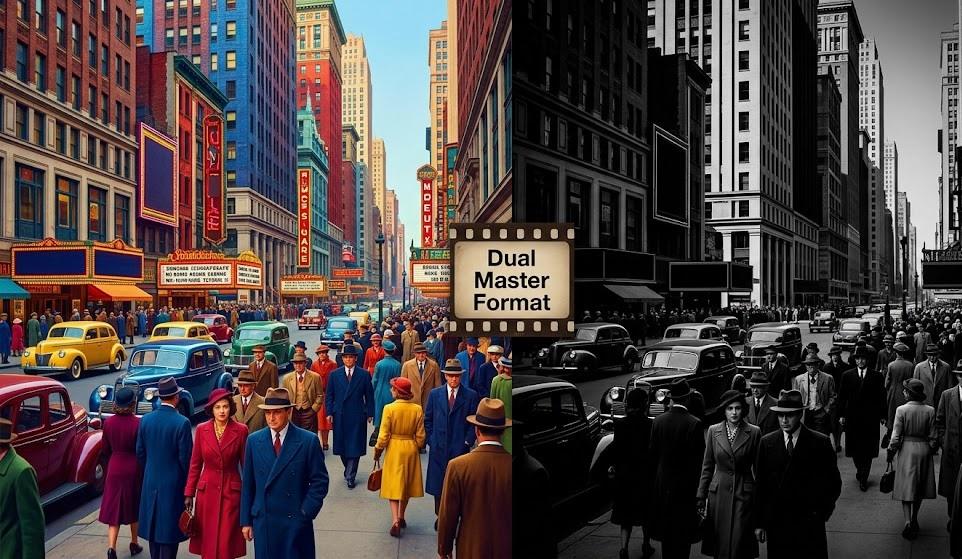
By deploying this classical visual grammar, the show establishes an immediate dialogue with the history of the medium. The streets of 1930s New York are rendered not as an idealized historical playground, but as a dangerous canvas where light is a premium commodity and darkness is an absolute certainty. This rejection of the standard high-saturation palette common to modern comic books aligns the project squarely with the historical lineage of the noir comics movement, where stark lines and visual omissions are used to mirror the ethically compromised nature of the characters.
| Adaptation Attribute | Standard Contemporary Hero Media | Spider-Noir (2026 Adaptation) |
| Visual Architecture | Saturated digital color, CGI-heavy skyboxes | Monochromatic chiaroscuro, practical shadowplay |
| Protagonist Motivation | Cosmic altruism, systemic protection | Survival, personal guilt, hard-boiled exhaustion |
| Narrative Pacing | Fast-paced escalation, multi-versal stakes | Slow-burn detective procedural, localized urban decay |
| Societal Outlook | Institutions are savable through heroic action | Systemic corruption is total and historically entrenched |
The Humphrey Bogart Synthesis and Hard-Boiled Disillusionment
At the core of the show’s thematic gravity is Nicolas Cage’s performance, which the actor has explicitly described as an artistic synthesis of seventy percent Humphrey Bogart and thirty percent Bugs Bunny. Cage draws heavily on the iconic mannerisms of classical cinema legends like James Cagney and Edward G. Robinson, specifically referencing Bogart’s seminal performance in The Big Sleep (1946). This stylistic grounding results in a protagonist who feels genuinely out of time—a bitter, cynical investigator burdened by an unspecified personal tragedy that left him fundamentally broken.
According to executive producers Phil Lord and Christopher Miller, Ben Reilly is a character who has already lived through his “Chinatown disillusionment moment” decades prior. He possesses no illusions about the efficacy of justice or the morality of the city’s power structures. He is old, drinks too much, and operates with a profound exhaustion. This thematic landscape shifts the series away from traditional action tropes and pushes it into the territory of psychological portraiture. The superhuman abilities of “The Spider” are treated not as a gift or a symbol of hope, but as a dangerous curse—a biological anomaly that Reilly hides beneath a trench coat and a battered fedora.
- Atmospheric Cynicism: The dialogue avoids the ubiquitous, self-referential quips of modern action writing, opting instead for stylized, rhythmically dense hard-boiled monologues.
- The Weight of Time: The physical toll of violence is central to the narrative; every punch thrown by an aging Reilly feels heavy, desperate, and thoroughly unglamorous.
Subverting Archetypes in the Shadow of the Metropolis
The strength of Uziel and Lightfoot’s narrative architecture lies in how the supporting cast populates this grim urban ecosystem. Brendan Gleeson delivers a chilling performance as Silvermane, reimagined not as a cartoonish supervillain, but as a dangerous, philosophizing Irish mob boss who controls the city’s political graft and underground syndicates. Gleeson’s villain represents the entrenched corporate and criminal institutions that traditional hard-boiled detectives are powerless to truly dismantle.

Contrasting Reilly’s absolute nihilism is Lamorne Morris as Robbie Robertson, a relentless freelance journalist fighting against systemic racial and institutional blockades in 1930s Manhattan. Morris provides the narrative’s critical perspective on the era’s social stratifications, acting as an optimistic foil to Reilly’s terminal cynicism. Meanwhile, Li Jun Li portrays Cat Hardy, a classic femme fatale nightclub singer whose character design and performance find inspiration in golden-age Hollywood screen legends like Anna May Wong, Rita Hayworth, and Lauren Bacall. Hardy operates as the emotional and conspiratorial epicenter of the season’s central plot, demonstrating the multifaceted survival strategies required of women navigating a thoroughly predatory underworld. As detailed in recent entertainment media reporting, this ensemble structure elevates the production beyond simple comic book adaptation, positioning it as a legitimate piece of historical neo-noir criticism.
A Haunting Refraction of Pop Culture
Ultimately, Spider-Noir succeeds because it refuses to compromise the historical conventions of the genre it adapts. It treats the 1940s cinematic tradition not as an aesthetic veneer to be discarded when the action escalates, but as a fundamental philosophical framework. By filtering a globally recognized archetype through the lens of Great Depression-era exhaustion, the series exposes the fragility of the classic American hero mythos.
The result is a haunting, beautifully shot text that challenges the current state of television storytelling. It demonstrates that the most compelling mysteries are not found in the grand cosmic expanse, but in the dark corners of human nature, the moral compromises of survival, and the long, cold shadows cast by a city that has lost its soul.