

Godfather of Harlem is no longer only returning for another crime-drama event. MGM+ announced on July 1, 2026, that the Forest Whitaker-led series will receive a two-hour series finale, with production set to begin in New York City that same month. That decision changes the shape of the show. Bumpy Johnson’s story is moving from serialized gangster survival into legacy noir, where the central question is no longer how long a boss can hold territory, but what remains after the city, the family, and the political moment have all collected their debts.
Why The Two-Hour Finale Changes The Meaning Of Bumpy Johnson’s Story
MGM+’s official finale announcement confirms that Forest Whitaker will return as star and executive producer for the two-hour conclusion of Godfather of Harlem. The announcement also states that production will begin in New York City in July 2026, grounding the finale in the same urban geography that has shaped the series from the beginning.
That matters because Godfather of Harlem has always been built around return. The MGM+ series page describes the drama as a reimagining of Bumpy Johnson’s story after he comes back to early-1960s Harlem from a decade in prison and finds the neighborhood he once ruled in shambles. The premise is pure noir: a man returns to a place he thinks he knows and discovers that time has made him a stranger.
A two-hour finale pushes that structure toward final accounting. Bumpy has spent the series fighting Italian mob pressure, political change, federal heat, family strain, and the moral cost of power. A standard season could keep those conflicts moving. A finale has to ask what they have meant. Legacy noir begins when power can no longer be measured only by territory. It has to be measured by damage, memory, and the people left behind.
How Harlem Turns Gangster Drama Into Urban Noir
Harlem is not scenery in Godfather of Harlem. It is the show’s moral engine. The series works because Bumpy’s authority is inseparable from streets, restaurants, clubs, churches, apartments, political offices, and community spaces where crime and civic life overlap. He does not rule from a distant mansion. He rules from proximity, which makes every compromise more intimate.
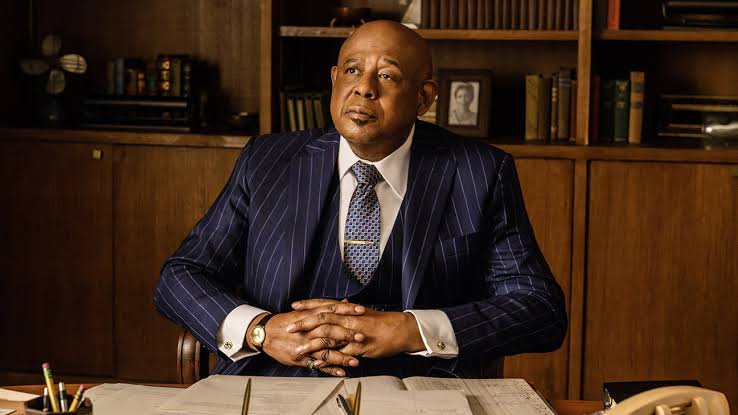
That is why the show belongs in the same conversation as Noir Whale’s earlier urban crime cinema analysis, where city design becomes part of betrayal. Godfather of Harlem uses a similar pressure in television form. Harlem’s blocks are where deals happen, loyalties shift, police surveillance tightens, and public life turns private danger into neighborhood rumor.
This is different from a gangster epic built around empire. Bumpy’s power is territorial, but it is also symbolic. He is feared, respected, needed, resented, and watched. The neighborhood gives him his authority while constantly reminding him that authority has a human cost. Noir thrives in that contradiction. The protagonist may believe he is protecting a place, yet the same protection can become another form of control.
By returning production to New York City for the finale, MGM+ is keeping that local charge alive. The city is part of the story’s credibility. Harlem noir cannot work if the place feels abstract. It needs storefronts, brownstones, corners, nightclubs, police rooms, and rooms where history presses against every decision.
Why Forest Whitaker’s Bumpy Johnson Became A Legacy Role
Forest Whitaker’s performance has always carried more than gangster command. His Bumpy Johnson is watchful, strategic, wounded, and aware that every victory can look smaller the morning after. That is central to the series’ noir identity. Bumpy is not written as a fantasy king untouched by consequence. He is a man trying to control history from inside it.
The show’s current finale framing makes Whitaker’s performance feel like a legacy role because it asks the audience to revisit everything Bumpy has carried: prison, Harlem’s transformation, family obligations, Italian mob competition, civil rights-era pressure, and the problem of being both community protector and criminal force. That duality is why the character remains compelling. He can be charismatic without being clean. He can be principled without being innocent.
UPI reported on July 3, 2026, that MGM+ greenlit the two-hour finale and that Whitaker will make his final appearance as Bumpy Johnson in the event. That UPI finale report reinforces the sense that the show is closing around a performance as much as a plot.
A legacy finale should not simply reward Bumpy with myth. It should test the myth. Noir is strongest when it refuses easy monument-building. If the finale treats Bumpy only as a folk hero, it loses the shadow. If it treats him only as a criminal, it loses the political and cultural complexity that made the series distinct. The best ending would leave both truths in the frame.
How The Series Blends Fact, Fiction, And Historical Noir
Godfather of Harlem has always dramatized history rather than simply replaying it. Time’s background coverage of the series explains how the show reimagines real Harlem crime boss Ellsworth “Bumpy” Johnson, his return after prison, the Genovese crime family pressure, and his interactions with major historical figures such as Malcolm X and Adam Clayton Powell Jr., while also using fictionalized material and dramatic compression. That true-story context is useful because it reminds readers that the series is not a documentary.
The noir value comes from that tension. Historical noir often works by placing real events inside a moral atmosphere. The audience recognizes names, dates, institutions, and political movements, but the drama asks how history felt to the people caught between survival and principle. Bumpy’s world is not cleanly divided into crime and politics because the 1960s Harlem setting refuses that division. Power arrives through streets, pulpits, unions, police pressure, drug money, community influence, and public reputation.
That is why the show’s legacy question reaches beyond one gangster. The finale can ask what kind of historical memory crime dramas create when they put a charismatic criminal at the center of real social change. Bumpy’s story intersects with civil rights history, but it cannot replace it. The series works best when it keeps that boundary visible: crime may shape the neighborhood’s power map, but it is not the same as liberation.
This is where legacy noir becomes more demanding than nostalgia. It asks viewers to sit with contradiction rather than flatten Bumpy into symbol. He is an operator, a survivor, a husband, a father, a boss, a negotiator, and a man whose choices are never detached from harm.
Why The Finale Should Treat Harlem As The Survivor
The two-hour format gives MGM+ room to close more than Bumpy’s arc. It can also close the show’s argument about Harlem. Across the series, Harlem has been a battleground for mob competition, Black political life, music, religious leadership, family conflict, and police scrutiny. Bumpy may be the central figure, but the neighborhood is the continuity.
That is why a strong finale should resist the temptation to make every emotional beat about personal triumph or downfall. A legacy ending needs to show how power passes, mutates, or dissolves. Bumpy Johnson died in 1968 in real life, and the show’s final chapter arrives with the knowledge that time is closing around the character whether the drama reaches that exact historical endpoint or stops before it. The viewer already knows that no street king rules forever.
Noir endings rarely offer clean justice. They offer recognition. A character sees the machinery more clearly, even if he cannot defeat it. For Bumpy, that machinery includes organized crime, state surveillance, economic pressure, racial politics, and the hunger of younger men waiting for their turn. The tragedy is not only that power ends. It is that power keeps demanding proof until the person holding it has little left outside the role.
If Godfather of Harlem wants a truly noir ending, it should let Harlem outlast the legend. The streets should feel older than Bumpy and larger than his reach. That would give the finale a harder emotional truth: the man may dominate the frame, but the city owns the final shot.
How MGM+ Is Using Crime Drama As Prestige Identity
The finale also fits MGM+’s broader crime-drama identity. The network has used titles such as Godfather of Harlem, Hotel Cocaine, and The Westies to build a lane around period crime, neighborhood power, and institutional pressure. These shows are not only about criminals. They are about cities under transformation, ethnic enclaves under stress, and old forms of control colliding with new social realities.
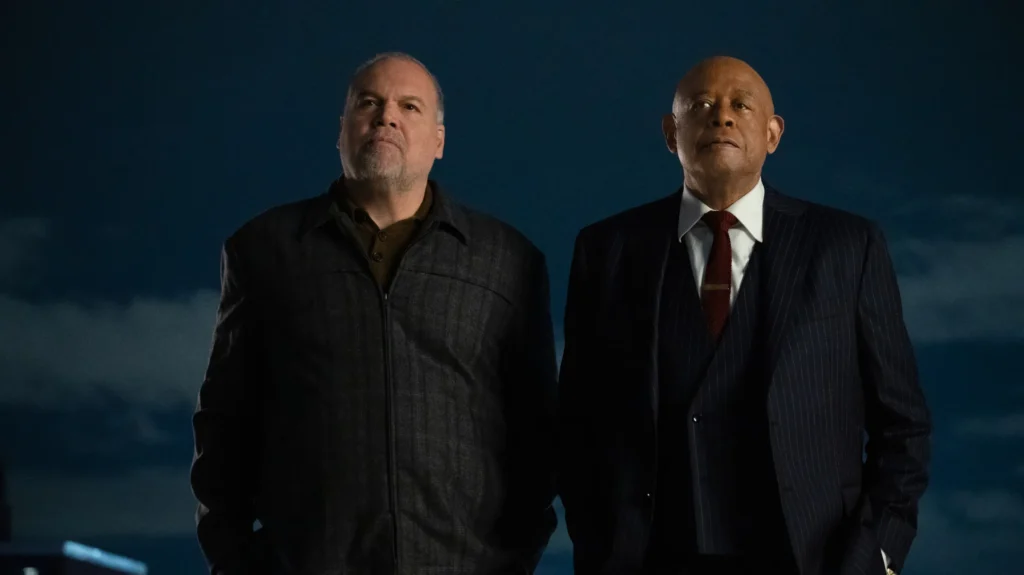
That makes Godfather of Harlem especially valuable to MGM+. It carries a recognizable star, a historical hook, and a crime-world structure that can support both action and political drama. It also gave the platform a signature series across the Epix-to-MGM+ transition, which makes the final chapter feel like a brand marker as much as a story event.
For Noir Whale readers, the network context matters because modern noir often lives on streaming and premium cable through serialized crime worlds. The theatrical noir film compressed dread into 90 minutes. Streaming noir stretches it across seasons, letting suspicion, grief, loyalty, and compromise build through repetition. Godfather of Harlem has used that format to turn Bumpy’s return into a long argument about control.
A two-hour finale is the right shape for that argument if it avoids becoming only fan service. Crime drama endings need rhythm. They need time for alliances to break, for family scenes to land, for political consequences to surface, and for the final image of power to feel earned.
Why Bumpy Johnson’s Legacy Noir Still Matters Now
Godfather of Harlem matters in 2026 because it shows how the gangster story can still carry noir weight when it treats history, place, and moral compromise seriously. The genre does not need another fantasy of untouchable criminal glamour. It needs figures whose authority is constantly questioned by the city that made them.
Bumpy Johnson is a perfect legacy-noir subject because he cannot be separated from contradiction. The real man became part of Harlem criminal history. The television version, shaped by Whitaker’s performance and MGM+’s dramatic frame, becomes a way to examine how communities remember dangerous men who also understood power, protection, and public image. That memory is never neutral.
The final chapter can make that ambiguity the point. If Bumpy wins too cleanly, the show risks sanding away its own darkness. If he loses too simply, it risks reducing a complex series to punishment. The best noir ending would let victory and loss occupy the same room.
That is why MGM+’s two-hour finale has more weight than a standard sendoff. It is a chance to turn a crime saga into a final study of legacy: what Bumpy built, whom he hurt, whom he protected, what Harlem tolerated, what history remembered, and what the city refused to forgive. In legacy noir, the final question is not whether the king survives. It is whether the kingdom ever belonged to him at all.