

Lucky gives Apple TV a crime story built less around the clean geometry of a perfect heist and more around what happens after control collapses. The limited series premieres globally on July 15, 2026, with Anya Taylor-Joy starring and executive producing as Lucky, a young woman who escaped the criminal life she was raised in but is forced back into it after a multimillion-dollar heist goes wrong. Apple’s official materials frame the show as a pulse-driven crime drama, yet the deeper appeal is pure fugitive noir: a woman on the run, a past that refuses to stay buried, the FBI closing in, and a ruthless crime boss turning freedom into something that has to be stolen twice.
Why Lucky Turns The Heist Into A Fugitive Story
Apple’s official Lucky trailer announcement confirms the series will debut with its first two episodes on Wednesday, July 15, followed by weekly episodes through August 19. That release pattern matters because Lucky is not being sold as a one-night heist movie with a single pressure point. It is a serialized escape story, built for accumulating pursuit, betrayals, reversals, and identity fractures.
The official premise says Lucky is a con artist forced to go on the run after a multimillion-dollar heist goes sideways. She is pursued by both the FBI and a ruthless crime boss, which places her between institutional law and criminal consequence. That is exactly where fugitive noir lives. The protagonist is not innocent enough to be a victim and not powerful enough to be safe. She knows the criminal world because it made her, yet that knowledge does not protect her from being hunted by it.
A classic heist story often focuses on planning: crew selection, timing, alarms, routes, disguises, and the fantasy of precision. Fugitive noir starts after precision fails. It studies improvisation, paranoia, false identities, unsafe rooms, emotional debts, and the terrible intimacy of being known by the wrong people. Lucky looks strongest when read through that lens. The failed heist is the spark. The real story is what the past demands once the plan burns.
How Anya Taylor-Joy Fits The Modern Noir Antihero
Anya Taylor-Joy is a smart fit for fugitive noir because her screen presence often carries stillness and danger at the same time. Apple lists Taylor-Joy as star and executive producer, with the cast also including Annette Bening, Timothy Olyphant, Aunjanue Ellis-Taylor, Drew Starkey, Clifton Collins Jr., and William Fichtner. That ensemble suggests a crime web built from family, law enforcement, criminal pressure, and uneasy intimacy rather than a simple chase.
The Apple TV Lucky press page states that the series is written by Jonathan Tropper and Cassie Pappas, based on Marissa Stapley’s bestselling novel, and centers on a young woman who left crime behind but must embrace her darker criminal side one final time to escape her past. That “one final time” phrasing is classic noir temptation. The character believes she can use the old skill set without becoming the old self. Noir usually knows better.
Taylor-Joy’s casting sharpens that conflict because she can make calculation look like survival rather than glamour. A fugitive-noir lead cannot simply be clever. She has to make the viewer feel the cost of cleverness. Lucky’s danger is not only that she might be caught. It is that every decision might prove she never truly escaped the person her past trained her to be.
That is where Lucky connects with Noir Whale’s earlier heist noir streaming analysis, where obsession and strategy replaced straightforward justice. Lucky seems to move that idea into a more personal key. The crime is not only an operation. It is a mirror.
Why Apple TV Is Framing Crime Through Character Pressure
Apple TV’s crime and thriller slate has often leaned toward character psychology rather than pure procedural machinery. Lucky fits that pattern by making the heist less important than the person who survives it. The series comes from Apple Studios and Hello Sunshine, with Jonathan Tropper serving as creator, co-showrunner, writer, and executive producer through Tropper Ink. Cassie Pappas serves as executive producer and co-showrunner, while Reese Witherspoon and Lauren Neustadter executive produce for Hello Sunshine. Taylor-Joy executive produces through LadyKiller, and Jonathan van Tulleken directed the pilot and executive produces.
Those names matter because the production frame points toward a prestige limited series rather than a generic crime vehicle. Hello Sunshine’s involvement also signals interest in women-led suspense stories where danger is tied to identity, self-definition, and social pressure. Lucky is based on Marissa Stapley’s New York Times bestselling novel and Reese’s Book Club pick, which gives the series a built-in book-club thriller audience beyond conventional heist fans.
That makes the noir angle especially useful. A conventional heist pitch would sell money, speed, and reversal. Fugitive noir sells entrapment. Lucky may be running from the FBI and a crime boss, but the deeper pressure is narrative inheritance. She was raised in crime. She left. Now the plot asks whether leaving was escape or only delay.
The limited-series structure can make that inheritance feel heavier. Each episode can tighten a different circle: family history, federal pursuit, romantic betrayal, criminal reputation, financial need, and the old thrill of being good at the wrong thing. Noir works when the net becomes emotional before it becomes physical.
How Marissa Stapley’s Novel Gives The Series A Noir Spine
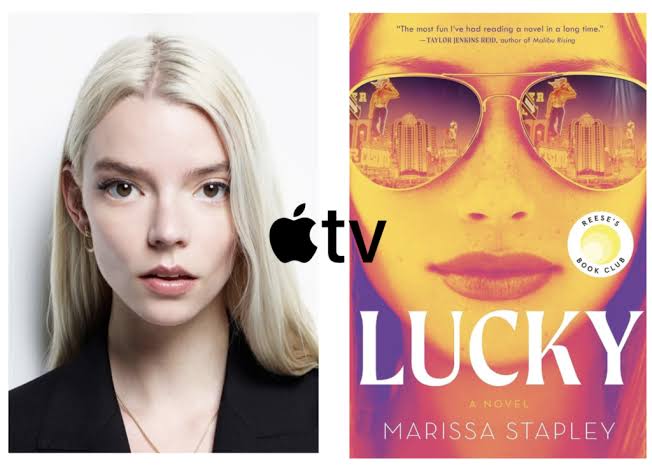
The book origin matters because Lucky is not an original caper invented only for streaming pace. Marissa Stapley’s novel gives Apple TV a character-first source about a woman shaped by cons, survival, and unfinished personal history. Apple’s trailer announcement identifies the novel as both a New York Times bestseller and a Reese’s Book Club pick, which helps explain why the adaptation is being positioned around Taylor-Joy’s interior tension as much as external danger.
Fugitive noir depends on backstory more than many heist stories do. A heist can begin with a job. A fugitive story begins long before the chase starts. It asks who taught the protagonist to lie, who benefited from that training, who still has leverage, and what moral line the character believes she has crossed or refuses to cross.
That is why Lucky’s criminal upbringing is more than exposition. It is the series’ noir engine. She is not a tourist in the underworld. She is returning to a language she already speaks. That creates a different kind of suspense. The audience is not only watching whether Lucky can survive. It is watching whether survival requires fluency in the very life she tried to abandon.
Aunjanue Ellis-Taylor’s role in the ensemble adds another important pressure point, since the FBI side of the story can keep the chase from becoming romanticized. Law enforcement in noir is rarely simple protection. It can be necessary, compromised, relentless, or blind to the human mess underneath the case. A fugitive story gains texture when the state, the criminal world, and the protagonist all define “justice” differently.
Why Fugitive Noir Feels Fresh In The Streaming Era
Streaming has made crime stories bigger, longer, and more psychologically layered. That can be good for fugitive noir because running away is rarely a single event. It is a pattern. The protagonist changes cities, names, clothes, allies, and stories. The past keeps catching up because the past is not only behind her; it lives in her instincts.
Lucky has the right ingredients for that form: a failed multimillion-dollar heist, a woman with a criminal upbringing, a crime boss, the FBI, family shadows, and a weekly rollout that can stretch pursuit into dread. The July 15 debut with two episodes gives Apple TV a quick opening hook, while weekly releases through August 19 give viewers time to track reversals rather than consume the entire chase at once.
That pacing suits noir. Binge releases can make crime plots feel disposable once the answer is known. Weekly episodes give suspicion time to work. Viewers can sit with who lied, who knows Lucky’s past, who benefits from her capture, and whether the “one final job” logic is ever anything more than a trap.
Fugitive noir also fits a post-glamour heist moment. Audiences have seen countless slick criminals execute impossible plans. A more interesting modern question is what happens when a gifted criminal no longer wants the gift. Lucky’s skill set may save her, but it may also make freedom harder to recognize. That tension is more durable than the mechanics of any single robbery.
Why Lucky Could Turn Heist Glamour Into Moral Debt
The most promising thing about Lucky is that its title can work as accusation. “Lucky” sounds light, almost charming, but the premise suggests a harsher irony. Luck may be what people call survival when they do not want to name the training, damage, or compromise behind it. A con artist’s luck is rarely accidental. It is observation, timing, risk tolerance, and the ability to become what someone else expects to see.
Noir is suspicious of luck because luck often comes with a bill. The question for the Apple TV series is whether Lucky’s escape will cost her a self she still wants to keep. A crime boss can be outrun for a while. The FBI can be misdirected. A stolen identity can hold for a few days. The past is harder because it knows where the weak points are.
That is why the show could revive fugitive noir for a streaming audience. It has a star with a strong psychological screen presence, a bestseller source, a clean release strategy, and a crime premise that can move beyond “one last job” cliché if it treats escape as moral pressure rather than only plot momentum.
For Noir Whale readers, Lucky is worth watching because it could bring heist storytelling back to noir’s deeper question: what if the crime is not the robbery, but the life that made the robbery feel possible? If Apple TV lets that question shape the series, Lucky could turn a chase thriller into a study of identity, inheritance, and the price of using old darkness to buy a new life.