

Celestial Return makes its strongest case through a cruel idea: survival is not a stable condition. Metaphor Games and publisher Shoreline Games position the upcoming PC title as a cyberpunk-noir narrative RPG where dice are “your bullets, your bribes, and your last breath,” a phrase that turns chance into the center of the fiction rather than a side mechanic. The official publisher factsheet currently lists the full release window as Summer 2026, with PC as the announced platform and RPG, Story Rich, Dice, Cyberpunk, Narrative, and Sci-fi as core genre markers. That matters for noirwhale.com because the game is not using noir only as rain, neon, and detective styling. It is using noir as a system of pressure, where every roll feels like another step through a city designed to exhaust the people trapped inside it.
Why Celestial Return Treats Dice As Survival Pressure
The central hook of Celestial Return is not that dice exist. Many RPGs use dice, percentages, checks, and hidden numbers. The sharper idea is that dice become the story’s economy of breath. The game’s official Celestial Return page describes a narrative-driven RPG where players loot, gamble, and survive a reality-crumbling city while trying to uncover cosmic horrors and outwit corrupted megacorps. In that sentence, the dice mechanic is not framed as a clean tactical tool. It is a desperate resource inside a broken social order.
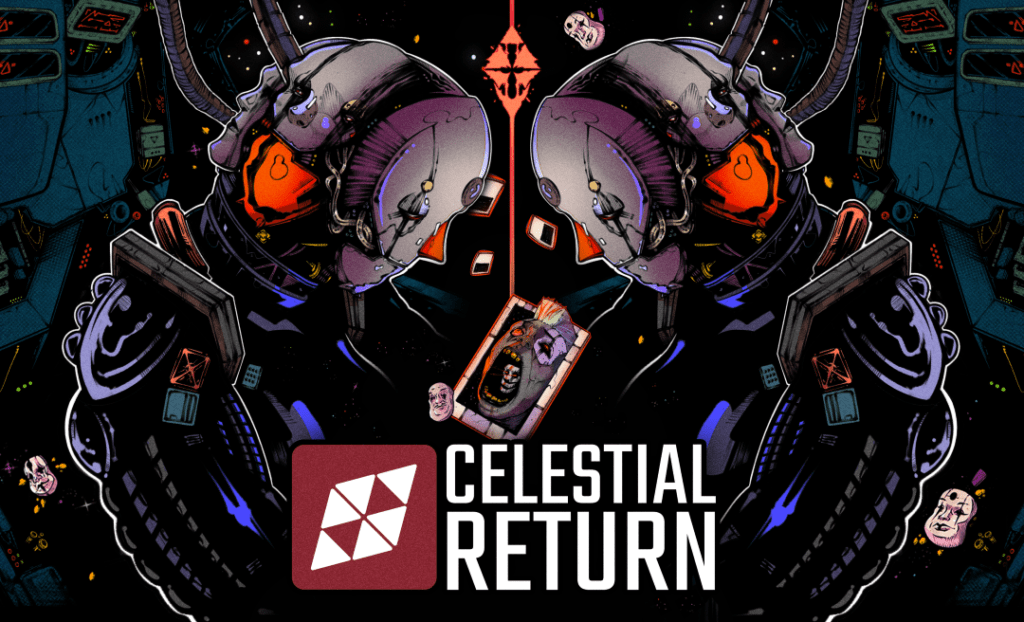
That turns the gameplay loop into noir structure. Classic noir often follows a protagonist who thinks he can solve a case, only to learn that the case is only the visible edge of a larger sickness. Celestial Return translates that feeling into resource pressure. Detective Howard is not simply collecting clues; he is spending his chances. Dice are used as weapons, bribes, and social leverage. Saving them can close doors. Spending them can burn the future.
That is why the “doomed gameplay loop” phrase fits the game’s identity. A standard power fantasy rewards players for building toward control. Celestial Return seems more interested in making control temporary. Each roll carries the anxiety of debt. Each decision turns survival into negotiation. The player is not only asking, “What is the correct choice?” The stronger question is, “What part of myself can I afford to spend?”
How Corporate Rot Gives The Horror A Human Shape
Cosmic horror can become vague if the threat stays too abstract. Celestial Return keeps the dread grounded by tying it to corporate corruption, urban decay, and human disposability. Shoreline Games describes Netherveil City as a place where streets bleed neon, corpses crawl back to life, and secrets threaten sanity. The publisher’s Celestial Return factsheet names Metaphor Games as developer, Shoreline Games as publisher, PC as platform, and Summer 2026 as the full release window.
That corporate angle gives the cosmic threat a social body. The horror is not only a thing from beyond comprehension. It is supported by systems that already know how to erase people. The game’s language about the forgotten, the erased, and the expendable is important here. Noir has always worked best when crime is not limited to a single villain. The murder, missing person, or conspiracy is only the entry point. The deeper subject is a city that has learned to feed on its own residents.
Detective Howard’s case begins with a dying city, a string of suicides, and corpses returning to life. Those details belong to horror, but the structure belongs to noir. A detective follows a trail, finds official explanations that do not hold, and moves through institutions that benefit from silence. The megacorp becomes a modern version of the corrupt studio boss, banker, fixer, or political machine from older noir traditions. It has money, reach, and plausible denial. Cosmic dread supplies the scale. Corporate rot supplies the motive.
Why The Doomed Loop Feels More Noir Than Combat Grinding
A doomed loop is different from a hard game loop. Difficulty can be mechanical. Doom is moral, emotional, and structural. Celestial Return appears to build that doom through choices, personality fragments, and conversational combat rather than standard action escalation. The Steam release page currently lists the game as coming soon, with Metaphor Games as developer and Shoreline Games as publisher, and tags it across CRPG, Story Rich, Dice, Choices Matter, Cyberpunk, Narrative, Interactive Fiction, Atmospheric, Dialogue Heavy, Isometric, Surreal, and Tabletop categories.
Those tags show why the loop matters. This is not a shooter where doom comes from running out of ammunition. It is closer to a noir interrogation scene where every answer narrows the room. The official materials describe personality traits such as Intelligence, Virtue, and Foolishness as forces that can shape choices. That suggests a story system where character is not only expressed through dialogue; character becomes a mechanical resource.
That design makes the detective fantasy unstable in the right way. Howard does not sound like an untouchable investigator who stands above the case. He sounds like a man being rewritten by it. In noir terms, that is vital. The best detective stories do not leave the detective clean. The case gets under the skin. In Celestial Return, the case seems to get into the rules themselves.
That connects naturally with noirwhale.com’s earlier video game noir analysis, where inner monologue and psychological pressure shaped gameplay identity. Celestial Return moves that pressure from voice into currency. Thought, luck, morality, and survival all sit at the same table.
How Cosmic Horror Changes The Detective’s Job
Cosmic horror and detective fiction share a dangerous structure: both begin with the belief that truth can be uncovered. The detective gathers evidence. The cosmic-horror protagonist gathers signs. The difference is what truth does to the person who finds it. In detective fiction, truth can expose corruption. In cosmic horror, truth can break the mind.
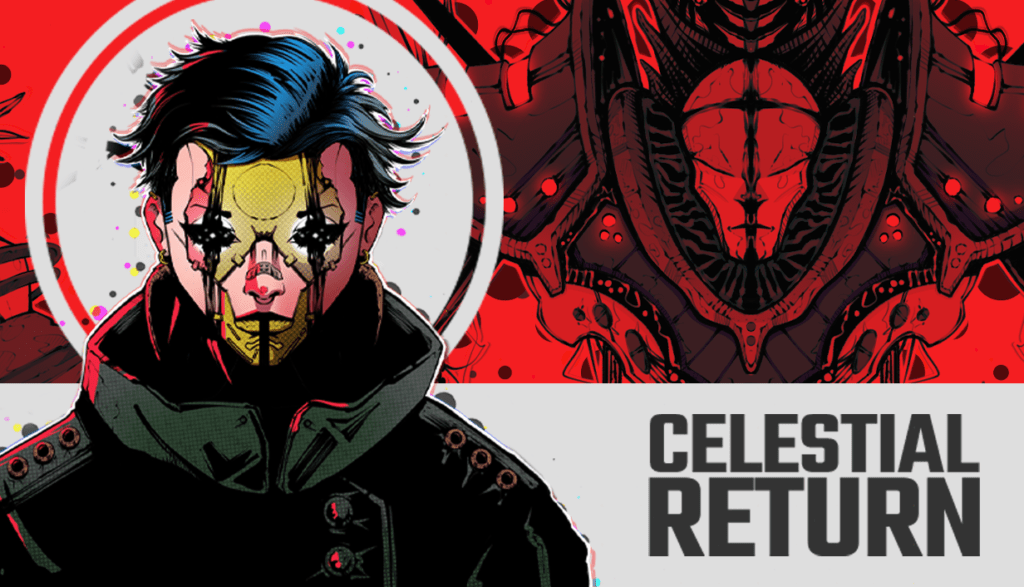
Celestial Return appears to thrive in that overlap. Howard investigates suicides, resurrected corpses, megacorp secrets, and a city whose reality is failing. The game’s official materials describe a world where the player must explore, interrogate the dead, expose corporate powers, investigate, make choices, loot dice, roll dice, and survive. That chain of verbs matters. It shifts from detective work into ritualized risk. The player is not only solving. The player is gambling with perception, trust, and identity.
This is where the noir angle becomes more than visual style. Rainy cyberpunk streets and hand-drawn shadows can attract attention, but the genre fit comes from the detective’s shrinking certainty. Noir asks whether justice can survive inside a corrupt city. Cosmic horror asks whether sanity can survive contact with hidden truth. Celestial Return seems to ask both questions at once.
The game’s art direction supports that hybrid. Its cyberpunk-noir Steam page presents the project through hand-drawn visuals, surreal atmosphere, and dialogue-heavy RPG structure rather than photoreal horror. That choice matters. Hand-drawn distortion gives the city room to feel subjective. It can bend toward fear, grief, and corruption without pretending to be literal realism.
Why Netherveil City Works As A Noir Machine
Netherveil City is useful as a setting because it sounds predatory. The official description says the city “eats the weak,” a blunt image that fits both noir and cosmic horror. In older noir, the city often works like a trap. Offices, alleys, nightclubs, apartments, docks, and police rooms become pieces of a system that pushes the protagonist toward compromise. In Celestial Return, the city seems to do the same work with stronger supernatural teeth.
The sentient rose is an especially strange detail. On paper, it could sound whimsical. In context, it reads as part of the game’s hostile absurdity. Howard has a rusted badge, a sentient rose that talks back, and stolen dice. Those objects are not normal detective equipment. They feel like survival tools gathered from the wreckage of a world where ordinary institutions have failed.
That gives the game a strong identity among modern noir-influenced RPGs. Many cyberpunk stories use corporations as villains. Many cosmic-horror stories use unknowable entities as threats. Celestial Return gains texture by putting both into a city where the human and inhuman systems appear to reinforce each other. The corporation makes the horror practical. The horror makes the corporation feel endless.
What Players Should Watch Before Summer 2026
The key question before launch is whether Celestial Return can make its mechanics feel as desperate as its pitch. The official language is strong: dice as oxygen, no perfect build, no power fantasy, survival barely within reach. That is a clear promise. The risk is balance. If dice feel too scarce, the loop can become frustrating. If dice feel too easy to regain, the doom loses force. The game’s success may depend on making loss feel authored rather than arbitrary.
Players should watch how Metaphor Games explains failure states, replay value, branching decisions, and the relationship between personality traits and conversational combat as Summer 2026 gets closer. The premise works best if the player feels trapped by meaningful choices, not punished by random numbers. Noir depends on consequence. Cosmic horror depends on scale. A dice-driven RPG has to make both readable.
For noir fans, Celestial Return is promising because it treats style as structure. The neon, detective, megacorp, corpse, rose, and dice are not separate decorations. They all point toward the same idea: a person trying to stay alive in a city where chance has become currency and truth may be another form of debt. If the final game delivers on that pressure, its doomed loop could become one of 2026’s more distinctive uses of noir in interactive storytelling.