

Spider-Noir has turned one of superhero television’s riskiest visual bets into a mainstream streaming conversation. The Nicolas Cage-led series premiered first on MGM+ on May 25, 2026, then launched globally on Prime Video on May 27, bringing Ben Reilly, mob bosses, femme-fatale intrigue, and 1930s New York crime atmosphere into a format viewers could watch in either “Authentic Black & White” or “True-Hue Full Color.” That choice is the real story behind the show’s early success. Spider-Noir did not ask noir fans to accept a superhero painted black. It asked superhero viewers to sit inside noir’s shadows, rhythms, moral fatigue, and hard-boiled visual language long enough to understand why the style still works.
Why Spider-Noir’s Streaming Breakout Matters For Superhero Television
The superhero genre has spent years chasing scale: multiverses, apocalyptic stakes, studio crossovers, and familiar symbols enlarged until they risk losing intimacy. Spider-Noir moves in the opposite direction. Prime Video’s official trailer announcement framed the series as Nicolas Cage’s first leading television role, produced by Sony Pictures Television for MGM+ and Prime Video, with the May 25 MGM+ launch followed by the May 27 global Prime Video release. The hook was not a bigger universe. It was a smaller, darker city.
That mattered once the series reached streaming charts. Collider reported in June 2026 that Spider-Noir became a Prime Video No. 1 hit after six days, briefly turning a black-and-white superhero detective story into the platform’s dominant title. Streaming rankings shift quickly, but the signal was still useful: audiences were willing to sample a superhero show that looked closer to 1930s pulp, classic crime cinema, and Depression-era urban dread than the polished brightness associated with most comic-book television.
That success is especially relevant for noirwhale.com because it proves noir can still be commercially legible when attached to a recognizable pop figure. The audience did not need to be trained in Double Indemnity, The Big Sleep, or Touch of Evil to understand the appeal. A trench coat, a wounded private investigator, a corrupt city, and black-and-white shadows still communicate danger fast. The superhero name opened the door. Noir gave the room its temperature.
How Black-And-White Became A Feature Instead Of A Barrier
The boldest creative decision was not simply making Spider-Noir available in monochrome. It was releasing the series with two visual pathways. Viewers could choose the black-and-white version or the color version, letting the format become part of the viewing conversation rather than a technical footnote. Prime Video’s Spider-Noir streaming page currently describes the series as a new action-drama about private investigator Ben Reilly, who is pulled into cases involving mobsters, monsters, and a femme fatale that force him to confront his former life as New York’s only superhero, The Spider.
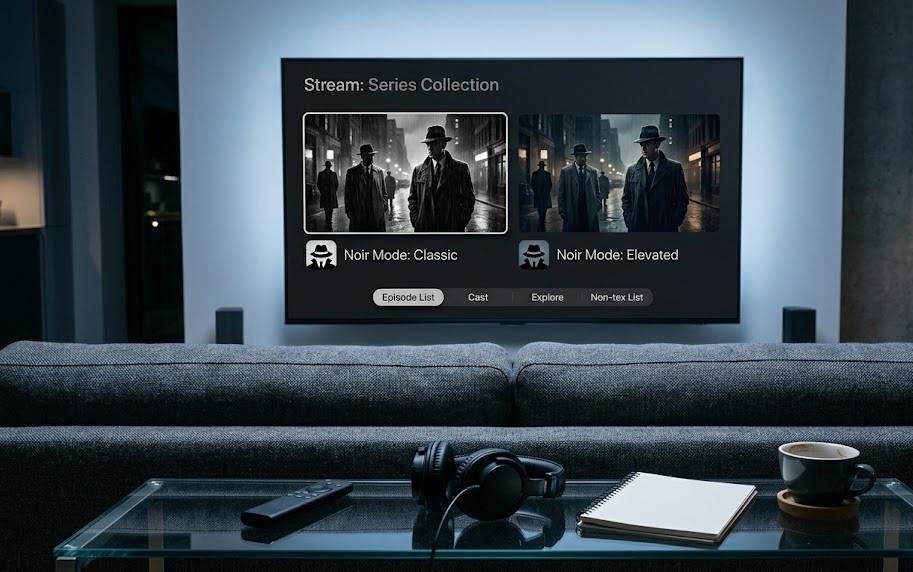
That premise becomes stronger in black and white because the image does some of the moral work. Shadows do not merely decorate the frame. They decide what the viewer can trust. Faces cut in half by light, wet streets, office blinds, nightclub contrast, and heavy silhouettes make the superhero body feel less triumphant and more haunted. In color, the world can read as heightened period style. In black and white, it reads as memory, guilt, and threat.
The show’s dual-format strategy also turns noir into a viewer choice. A traditional studio might fear that monochrome would limit casual attention. Spider-Noir used it as a selling point. ScreenRant’s discussion of the two viewing formats noted that the “Authentic Black & White” and “True-Hue Full Color” versions produce different viewing experiences, with the black-and-white option leaning more directly into the show’s noir identity through contrast and shadow. That conversation helped market the series without reducing it to plot spoilers.
The mainstream lesson is clear. Viewers will accept unusual form when the form is easy to explain and tied directly to the premise. Spider-Noir is not black and white because the creators wanted prestige distance from superhero media. It is black and white because the detective, the city, and the genre all make more sense in shadow.
Why Nicolas Cage Makes The Superhero Feel Like A Private Eye
Nicolas Cage is central to why the series can balance comic-book identity with noir fatigue. He had already voiced Spider-Man Noir in Spider-Man: Into the Spider-Verse, but the live-action version gives him a different task. He is not only playing a stylized variation on a known superhero. He is playing a man who has lived with the cost of being one.
The Prime Video listing names Cage as part of a cast that includes Lamorne Morris and Li Jun Li, while the larger ensemble includes Karen Rodriguez, Abraham Popoola, Jack Huston, and Brendan Gleeson. The show’s creative structure places Cage’s Ben Reilly inside a 1930s New York underworld rather than a bright heroic skyline. That shift changes the body language. The Spider is not introduced as a symbol of youthful motion. He is a wounded former vigilante dragged back into the suit by a city that never stopped needing violence.
That is where the casting becomes noir-specific. Cage can play grandeur, absurdity, exhaustion, and cracked sincerity in the same breath. A conventional superhero lead might try to make Ben Reilly cool. Cage makes him unstable, theatrical, and old-fashioned in a way that fits the genre. His performance can suggest Humphrey Bogart posture, pulp narration, and comic strangeness without smoothing out the contradictions.
This is also why Spider-Noir connects with earlier Marvel classic film noir analysis on noirwhale.com. The central tension remains the same: superhero responsibility survives, but the setting changes what responsibility feels like. In classic Spider-Man stories, the burden often produces motion. In noir, the burden produces wear. Cage’s version of Ben Reilly looks like a man whose heroic identity has become another debt.
How 1930s New York Gives The Show A Harder Moral Texture
Setting the series in 1930s New York does more than provide hats, cars, clubs, and period production design. It gives the story a harsher moral economy. A Depression-era city makes crime feel structural. Mob power, police pressure, class anxiety, nightclub survival, journalism, and neighborhood fear all sit close together. A masked hero entering that world cannot look clean for long.
That is why Spider-Noir works better as a private-eye story than as a standard superhero origin. The detective form begins with a case, but the case rarely stays contained. One missing person, one blackmail scheme, one murder, or one suspicious client becomes the opening to a wider system of corruption. The Prime Video premise uses exactly that structure: Ben Reilly is hired for cases that appear straightforward until mobsters, monsters, and a femme fatale pull him back toward his former life.
The series also benefits from making Robbie Robertson part of the story. Lamorne Morris’s presence brings journalism into the noir structure, which matters because noir often depends on people trying to document truth inside cities built to bury it. A reporter and a private investigator are natural genre partners because both ask questions that institutions would rather leave unanswered. When those questions unfold in superhero territory, the genre mix becomes more than costume play.
RogerEbert.com’s review noted that the black-and-white episodes lean heavily into 1930s film-noir style, while the color version carries richer saturated tones. That difference points to the show’s deeper achievement. It is not only adapting a comic. It is adapting the visual grammar of suspicion.
Why The Show Counters Superhero Fatigue Through Genre Discipline
The phrase “superhero fatigue” can be lazy when used as a blanket explanation for audience behavior. Viewers have not rejected capes, masks, and powers altogether. They have become less patient with repetition. Spider-Noir answers that problem through genre discipline. It does not simply add darkness to a superhero property. It lets noir rules reshape the property from the inside.
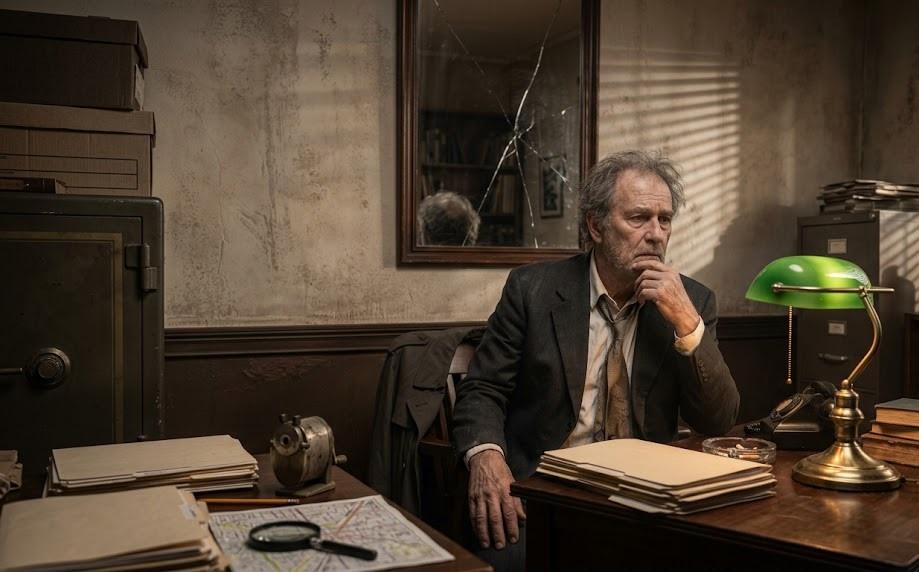
That means lower stakes can feel stronger. Ben Reilly does not need to save every possible universe for the story to matter. A corrupt room, a compromised ally, a mobster with too much reach, or a woman who knows more than she says can supply enough danger. Noir teaches superhero television that consequence does not have to arrive through scale. It can arrive through atmosphere, secrecy, and personal compromise.
The black-and-white option helps because it forces the viewer to read the screen differently. A modern superhero frame often points attention toward visual effects, bright costuming, and kinetic spectacle. A noir frame asks viewers to study where light falls, who stands in the doorway, what a character refuses to say, and which spaces feel too quiet. The result is a slower, more suspicious form of attention.
That may be why Spider-Noir found a wider audience than a niche experiment might have been expected to reach. It offered recognizable IP, a major star, a clean streaming pitch, and a strong visual identity. More important, it gave viewers a reason to talk about how they watched the show, not only what happened in it.
Why Mainstream Noir Needs Recognizable Gateways
Noir’s mainstream future may depend less on strict genre purity than on useful gateways. Ripley used Patricia Highsmith, Netflix, and black-and-white minimalism. Sugar used Colin Farrell, Apple TV, and alien detective melancholy. Spider-Noir uses Marvel-adjacent mythology, Nicolas Cage, MGM+, Prime Video, and a black-and-white viewing option. Each project gives casual viewers a familiar entrance before pulling them into older noir habits.
That does not weaken noir. It proves the style can survive translation. Noir has always been a hybrid language, drawing from crime fiction, German Expressionist lighting, American urban anxiety, postwar disillusionment, pulp magazines, and studio-era visual craft. A superhero detective in 1930s New York is a strange variation, but the ingredients are not random. Masked identity, guilt, urban corruption, and personal responsibility already belong to both superhero fiction and noir.
The risk for future projects is imitation without structure. Black-and-white images alone will not make a story noir. Neither will hats, cigarette smoke, venetian blinds, or a cynical voice. Spider-Noir works because its format, setting, character damage, and streaming presentation point toward the same central idea: heroism looks different when the city is already morally compromised.
What Spider-Noir’s Success Could Mean For The Next Wave Of Noir Television
Spider-Noir shows that mainstream audiences can accept stylized noir when the creative choices are legible and the platform makes them accessible. The series did not hide its black-and-white identity. It promoted it. It did not treat period crime as a decorative backdrop. It built the story around mob pressure, private investigation, old wounds, and a city that seems to punish anyone who still believes in justice.
That success could matter beyond superhero television. Streamers are constantly looking for formats that feel distinct without being impossible to market. Noir provides a ready-made language of mood, mystery, and moral tension. Superhero stories provide familiar icons. When the two are combined with care, the result can reach viewers who might avoid a traditional black-and-white crime drama but will sample a Nicolas Cage superhero detective series.
For noirwhale.com readers, the important point is not that Spider-Noir made noir trendy again. Noir never disappeared. It moved through crime thrillers, prestige TV, psychological horror, video games, and streaming mysteries. What changed is that Spider-Noir made the black-and-white detective mode visible to a larger audience at the exact moment superhero media needed a new shape.
The show’s early streaming success suggests a useful path forward: fewer inflated stakes, stronger visual rules, more local corruption, and protagonists whose powers do not erase their damage. In that sense, Spider-Noir did more than find an audience. It reminded mainstream television that darkness is not a limitation when the story knows what to do with the shadows.