

The official scheduling of Sugar Season 2 for a global return on June 19, 2026, marks an essential milestone for contemporary television. Created by Mark Protosevich and executive produced by Simon Kinberg alongside Audrey Chon, the Apple TV+ series disrupted the detective television landscape during its initial run by introducing one of the most audacious genre-bending twists in streaming history. By re-anchoring its enigmatic protagonist, John Sugar—portrayed with a magnetic, melancholic grace by Colin Farrell—back in the blinding glare of Los Angeles, the series forces a critical re-evaluation of the traditional private investigator archetype.
The upcoming eight-episode second season, shepherd by new showrunner Sam Catlin, moves away from the initial shock of its freshman run to interrogate the deeper philosophical consequences of its premise. Sugar operates within a lineage of “sunshine noir,” a distinct subgenre that strips away the rain-slicked dark streets of classic mid-century crime fiction and replaces them with the bleaching, deceptive warmth of Southern California. In this landscape, the corruption is not hidden in the dark; it is illuminated by the neon and daylight of Hollywood, making the moral rot all the more terrifying.
The Sunshine Noir Landscape of Contemporary Los Angeles
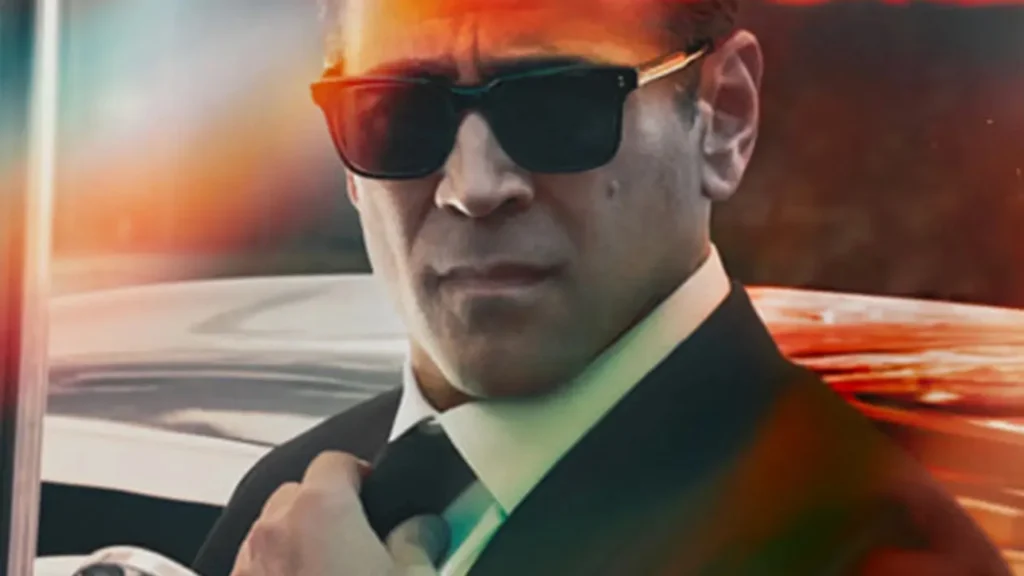
Los Angeles has always served as the spiritual and geographical capital of the American private eye narrative. From Raymond Chandler’s Philip Marlowe navigating the grimy margins of the 1930s coast to Chinatown’s Jake Gittes discovering the institutional theft of the city’s water, the metropolis is historically depicted as a beautiful illusion built upon a foundation of exploitation. Sugar deliberately taps into this specific tradition, using the city’s architectural layout, its gridlocked highways, and its glossy elite as a gilded cage for its characters.
The aesthetic framework of the series relies on a fascinating contrast. While classic cinema used heavy shadows to mask systemic rot, Sugar uses overexposure, saturated lens flares, and the sleek modernism of luxury estates. This stylistic choice underscores the thematic thesis of the show: in a city obsessed with image and superficial perfection, the truth is a commodity that must be violently extracted. John Sugar’s return to Los Angeles for a new missing person’s case re-establishes the city as the ultimate crucible for testing human morality.
| Noir Era | Representative Investigator | Visual Motifs | Core Cynicism |
| Classic Film Noir (1940s) | Philip Marlowe (The Big Sleep) | Chiaroscuro, rain, smoky bars | Individual moral decay, urban vice |
| Neo-Noir (1970s) | J.J. Gittes (Chinatown) | Sepia tones, historical dust, wide frames | Institutional and political corruption |
| Sunshine Neo-Noir (2020s) | John Sugar (Sugar) | High-saturation glare, digital crispness, cinematic cuts | Existential alienation, existential truth |
Subverting the P.I. Mythos Through Existential Alienation
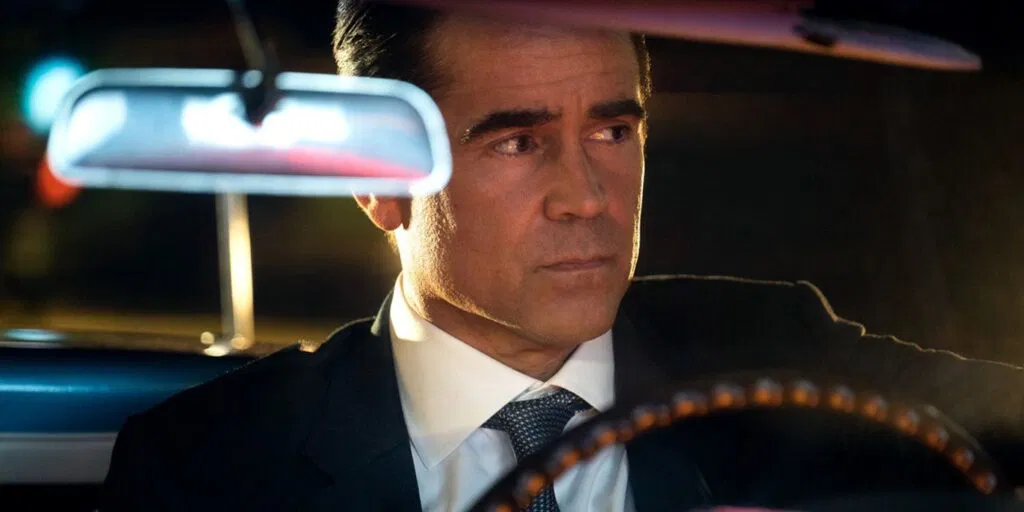
What elevates Sugar from a slick exercise in genre pastiche to a profound piece of television criticism is its handling of the investigator’s inherent isolation. Traditional neo-noir protagonists are alienated by their past trauma, their disillusionment with the law, or their exposure to the worst elements of human nature. John Sugar’s alienation, however, is literal, existential, and cosmic. The revelation that Sugar is an extraterrestrial observer—an alien anthropologist tasked with studying humanity—completely reframes his hyper-empathetic nature and his profound love for classical cinema.
Rather than treating this revelation as a cheap science-fiction gimmick, the narrative utilizes it to explore the ultimate outsider perspective. Sugar does not view human vice with the hardened cynicism of a broken cop; he views it with a deep, tragic confusion. He is a character who desperately wants to believe in the inherent goodness of humanity, even as his investigations bring him face-to-face with kidnapping, murder, and systemic cruelty. This psychological friction transforms him into one of the most complex noir icons of the modern streaming era, an investigator whose primary weapon is not a firearm, but an agonizingly deep capacity for empathy.
Tracking the Conspiracy: Boxing, Power, and New Cast Horizons
The narrative trajectory for Season 2 shifts the focus from the elite Hollywood dynasty of the Siegel family toward the gritty, high-stakes underworld of local athletics and citywide syndicates. The new mystery tasking John Sugar involves tracking the troubled older brother of an up-and-coming local boxer. What begins as a straightforward missing person’s case rapidly spirals into a deeply entrenched corporate and political conspiracy, expanding the boundaries of the show’s established universe.
To support this narrative expansion, Sam Catlin’s production has infused the sophomore season with a formidable array of veteran character actors and rising talent. This new ensemble structure alters the interpersonal dynamics of the series, providing fresh foils for Farrell’s internal performance.
- The Corrupt Infrastructure: The inclusion of actors like Tony Dalton (Better Call Saul) and Shea Whigham (Boardwalk Empire) injects a dangerous, unpredictable energy into the city’s power corridors.
- The Vulnerable Margins: Performers such as Sasha Calle, Laura Donnelly, Jin Ha, and Raymond Lee populate the shifting social strata of Los Angeles, representing the human collateral of the central conspiracy.
The Cinema Screen as the Ultimate Noir Filter
John Sugar’s defining trait remains his obsession with classic Hollywood movies. The series brilliantly mirrors his internal consciousness by deploying rapid, stylistic smash-cuts to archival footage of golden-age cinema—featuring legends like Humphrey Bogart, Glenn Ford, and Robert Mitchum. These classic clips do not merely function as easter eggs for cinephiles; they represent the moral lexicon through which an outsider attempts to decode human behavior. Sugar understands the world through the idealized, hard-boiled codes of vintage celluloid.
According to a comprehensive production feature published by Apple TV+, this self-reflexive style serves as an ongoing critique of the genre’s history. By comparing the reality of modern Los Angeles with the romanticized myths of old Hollywood, Sugar exposes the gap between the stories we tell ourselves and the brutal reality of survival. As the series heads into its second season, this cinematic filter will inevitably fracture further, forcing John Sugar to abandon his role as a passive, film-loving observer and fully engage with the dangerous, unpredictable currents of the city he has chosen as his home.