

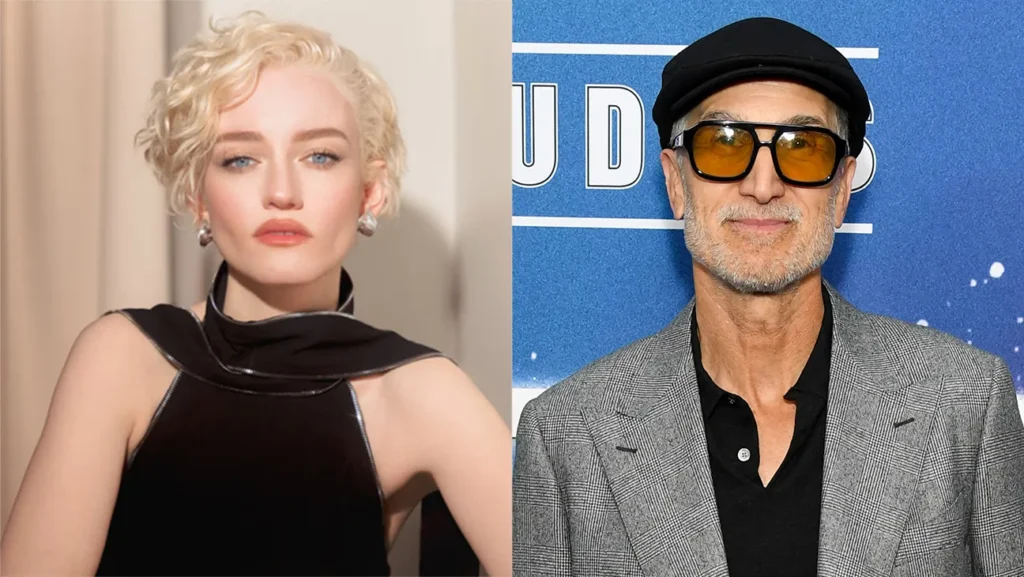
Guilty Creatures gives Apple TV a true-crime thriller with the right ingredients for Florida noir: heat, faith, romance, disappearance, long-term guilt, and the terrifying idea that ordinary life can continue for years after a murder. Apple announced the series on July 6, 2026, with Julia Garner set to star and executive produce, Craig Gillespie attached to direct and executive produce, Stuart Zicherman serving as showrunner and executive producer, and Sarah DeLappe adapting the story for the screen. The series is based on Mikita Brottman’s true-crime book Guilty Creatures: Sex, God, and Murder in Tallahassee, Florida, a title that already carries the shape of noir: desire, belief, violence, and a city forced to live with an unresolved wound.
Why Guilty Creatures Fits Apple TV’s Thriller Lane
Apple’s official Guilty Creatures announcement describes the series as a thriller led by three-time Emmy Award and Golden Globe winner Julia Garner, adapted from Brottman’s acclaimed true-crime book and produced by Tomorrow Studios. That production setup immediately separates Guilty Creatures from disposable true-crime programming. Apple is treating the material as a prestige limited-series thriller built around character psychology, not only case chronology.
That matters because the story’s noir potential depends on restraint. The real case involves Mike Williams, a Tallahassee man who vanished during a duck-hunting trip in December 2000, and a long investigation that eventually centered on his wife, Denise Williams, and his best friend, Brian Winchester. Apple’s announcement frames the series around “a torrid romance” and “an act of murder” between two young, adulterous but God-fearing lovers, with the story examining the emotional toll of living as killers for 18 years.
That last phrase is the noir engine. Many true-crime adaptations build tension around discovery: Who killed? How did they do it? When will police solve it? Guilty Creatures appears built around aftermath. What happens to love after violence? What happens to faith after deception? What happens to a community when the facts remain hidden but the emotional temperature changes anyway?
How Tallahassee Turns True Crime Into Regional Noir
Tallahassee matters because Florida noir is not Los Angeles noir with palm trees. It has its own moral weather. The city is the state capital, a college town, a government town, a Southern town, and a place where religious life, political life, family reputation, and outdoor culture can overlap in strange ways. A duck-hunting disappearance on Lake Seminole does not feel like a back-alley murder. It feels like violence entering through a familiar ritual.
The official Apple materials do not present Guilty Creatures as a police procedural. They point toward romance, faith, guilt, and the long emotional cost of concealment. That makes Tallahassee more than a location. It becomes part of the pressure system. In regional noir, place does not simply host the crime. It shapes what people can admit, deny, excuse, or bury.
Florida has always been useful to noir because its surfaces are so bright. Sunlight can make corruption feel more obscene. Churches, lakes, suburban homes, hunting trips, insurance paperwork, courtrooms, and family circles can all become part of the same shadow map. In Guilty Creatures, the terror is not only that a man disappeared. It is that life kept producing ordinary appearances after the disappearance.
That is why the series can connect naturally with Noir Whale’s earlier true crime noir analysis, where trust, memory, and close relationships were treated as the darkest modern noir settings. Guilty Creatures moves that idea into Florida: the danger is not a stranger in the distance, but intimacy itself.
Why Julia Garner Is A Strong Fit For Moral Ambiguity
Julia Garner’s casting is central to the project’s appeal because she has built a screen identity around characters who can look vulnerable, calculating, damaged, and unreadable at the same time. Apple identifies Garner as star and executive producer, and the announcement highlights her awards history through Ozark and other major roles. That history matters because Guilty Creatures needs a performer who can hold sympathy and suspicion in the same frame.
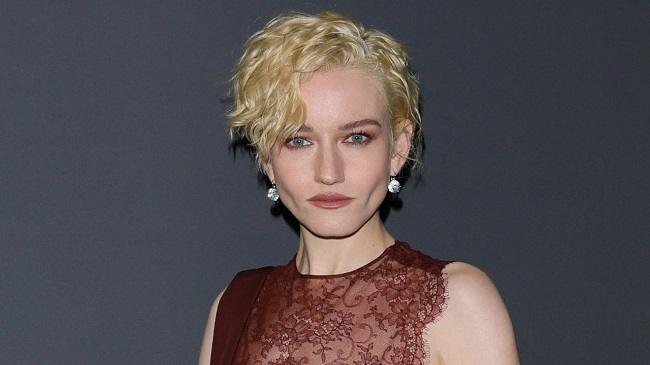
Garner’s breakout as Ruth Langmore in Ozark already placed her inside a world of crime, family pressure, money, fear, and survival. Guilty Creatures appears to ask for a quieter, more interior kind of darkness. If the series centers the psychological burden of long-term concealment, the performance cannot rely only on shock. It has to show the strain of appearing normal.
That is the hardest kind of true-crime noir to dramatize. The audience may know where the story is heading, but the emotional suspense comes from watching the face before confession, before exposure, before the community understands what it has been living beside. A character in that position is not only hiding from investigators. She is hiding from ordinary rooms, family memory, religious language, and the version of herself she still wants others to believe.
Garner’s executive-producer role also gives the series a stronger authorial connection to its central performance. This is not merely casting. It suggests Apple is building the show around a specific star-driven psychological reading of the material.
How Craig Gillespie Could Shape The Story’s Uncomfortable Tone
Craig Gillespie is another important signal. Apple confirms Gillespie will direct and executive produce, and his past work on I, Tonya, Pam & Tommy, Cruella, and Dumb Money points to an interest in public narratives, unstable reputations, media distortion, and people trapped inside larger cultural stories. That is a valuable fit for Guilty Creatures because the case is not only about an act of violence. It is about how a public story forms around a private lie.
Florida noir needs tonal control. Push too hard and it becomes lurid. Underplay too much and the true-crime spine disappears. Gillespie’s best work often understands how absurdity, cruelty, charm, and social judgment can coexist. That balance could help Guilty Creatures avoid the flat, exploitative version of true crime where every scene is either confession, clue, or melodramatic betrayal.
The Playlist reported on July 6, 2026, that the project centers on the Mike Williams case and noted earlier production listings connecting the series to Apple Studios and Tomorrow Studios, with filming expected in Atlanta between September 2026 and January 2027. That timeline suggests the show is still in a pre-release production phase, so any article about it should avoid pretending there are trailers, reviews, or confirmed episode details that Apple has not announced.
That uncertainty can work in the article’s favor. The story is compelling now because of the creative package: Garner, Gillespie, Brottman’s book, Apple TV, Tomorrow Studios, a Florida setting, and a true-crime case built around nearly two decades of concealment.
Why The Real Mike Williams Case Demands A Careful Adaptation
The Mike Williams case is emotionally dangerous material because it involves real people, a real disappearance, a real family, and real legal outcomes. A noir reading should not turn that into stylish abstraction. The point is not to aestheticize the murder. The point is to examine why the story’s structure fits noir: trust becomes evidence, memory becomes unstable, and ordinary relationships become the darkest rooms in the narrative.
Mikita Brottman’s book title, Guilty Creatures: Sex, God, and Murder in Tallahassee, Florida, identifies the story’s three main pressures before the reader opens the cover. Sex points to desire and betrayal. God points to religious language, public morality, and private contradiction. Murder points to the irreversible act that makes every earlier lie heavier. Together, they create a noir triangle where passion, belief, and violence cannot be separated.
A good Apple TV adaptation will need to preserve that complexity. The easiest version would flatten the story into a tabloid triangle. The stronger version would ask why certain lies survive. What social codes helped them last? What kinds of trust made suspicion harder? What did religious respectability conceal? What did community memory misread?
True crime becomes noir when the case is no longer only about the killer. It becomes about the world that made the lie plausible.
How Living With Guilt Becomes The Real Thriller
The most disturbing part of Apple’s official description is not the murder itself. It is the promise that the series will examine the emotional toll of living as killers for 18 years. That moves the story away from procedural suspense and toward psychological noir. The crime becomes the beginning of a long performance.
This is where Guilty Creatures could become more unsettling than a standard crime drama. A chase thriller externalizes fear. A courtroom drama formalizes it. A long-term guilt story domesticates it. The characters may attend church, maintain relationships, answer polite questions, repeat prepared explanations, and live among people who do not know what has happened. The horror is continuity.
That is a specifically noir form of dread. The past is not over. It sits inside every normal gesture. A dinner table can become an interrogation room. A prayer can become self-defense. A marriage can become evidence. A lake can become a psychological landmark.
Apple’s involvement suggests the series may lean into that interior pressure rather than rushing toward the mechanics of the case. That would be the right choice. The audience does not need another true-crime timeline if the emotional question is stronger: how long can a lie live before it starts controlling the people who built it?
Why Florida Noir Feels Different From Southern Gothic
It would be easy to label Guilty Creatures as Southern Gothic, and some of that language may apply. Yet Florida noir has a slightly different charge. Southern Gothic often emphasizes decay, grotesque family inheritance, religious dread, and the uncanny weight of tradition. Florida noir adds heat, water, public corruption, transient identity, bright surfaces, and the strange feeling that paradise imagery is hiding a crime scene.
Tallahassee sits at a crossroads of those moods. It has Southern history, state power, church life, college-town energy, and access to rural landscapes where a disappearance can feel both local and mythic. Lake Seminole, tied to the real Mike Williams disappearance, brings nature into the story not as escape but as misdirection. The original public explanation involved the assumption that Williams drowned and was eaten by alligators, a detail that gave the case an eerie Florida-specific mythology before the truth was later exposed.
That kind of regional detail can make Guilty Creatures feel distinct if handled carefully. The show should not use Florida as a punchline or a sensational backdrop. It should use Florida as a moral landscape: bright, humid, religious, social, and capable of making terrible things look like accidents for far too long.
What Guilty Creatures Could Add To Apple TV’s Crime Slate
Apple TV has been building a crime and thriller identity through series that privilege character pressure over simple case resolution. Sugar uses Los Angeles detective noir through a genre-bending lens. Lucky frames a heist through fugitive identity and criminal inheritance. Guilty Creatures could give Apple a true-crime story where the central suspense is not whether the audience can follow the clues, but whether the characters can keep surviving the selves they created after the crime.
That makes the project article-worthy before a trailer even exists. The announcement alone reveals a strong creative equation: Julia Garner’s moral ambiguity, Craig Gillespie’s interest in public scandal and performance, Brottman’s true-crime source, and a Tallahassee case where romance, faith, and murder become inseparable.
For Noir Whale readers, the show’s promise is not that it will make true crime darker. True crime is already dark. The promise is that it could make the darkness more legible. It could show how noir lives inside respectable rooms, old stories, church language, romantic fantasy, and the terrible comfort of believing a lie has lasted long enough to become life.
If Guilty Creatures succeeds, it will not simply retell a notorious Florida case. It will turn Tallahassee into a noir map of guilt: a place where the crime happened once, but the cover story had to be performed for 18 years.