

Dark Winds Season 4 arriving on Netflix on July 4, 2026 gives the series a wider second life at the exact moment American crime television needs its sharpest regional noir. The AMC/AMC+ thriller, based on Tony Hillerman’s Leaphorn & Chee novels and developed for television by Graham Roland, follows Navajo Tribal Police officers Joe Leaphorn, Jim Chee, and Bernadette “Bern” Manuelito through a 1970s crime world shaped by land, memory, law, and violence. Netflix’s Season 4 rollout brings Zahn McClarnon, Kiowa Gordon, and Jessica Matten back into the streaming discovery cycle, but the reason Dark Winds still matters is bigger than availability. It proves that American noir does not need another city skyline to feel dangerous. Sometimes the sharpest noir comes from a desert road, a missing girl, a federal blind spot, and a community forced to investigate itself.
Why Dark Winds Season 4 Matters On Netflix
Netflix’s Season 4 listing and Tudum coverage confirm that Dark Winds Season 4 began streaming on July 4, 2026, after its AMC run. The season follows Lt. Joe Leaphorn, Sgt. Jim Chee, and Sgt. Bernadette Manuelito as they investigate the disappearance of a Navajo girl, with the case pulling them from the Four Corners region toward 1970s Los Angeles and organized-crime danger.
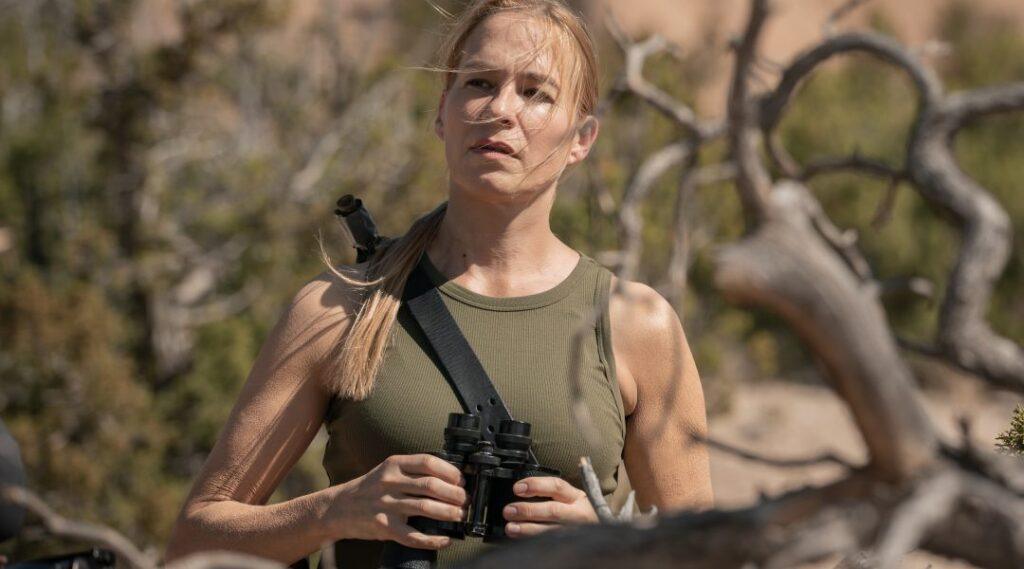
That streaming arrival matters because Netflix can turn a critically respected AMC crime drama into a broader audience discovery. Dark Winds has always had prestige credentials: executive producers include Robert Redford, George R.R. Martin, Zahn McClarnon, Chris Eyre, Tina Elmo, Anne Hillerman, and others, while the show’s core cast has carried the series with a mix of restraint, grief, and procedural intelligence. Yet Netflix gives the show a different kind of reach. It lets viewers who may have missed the AMC broadcast experience the season as a modern crime import inside America’s own borders.
The phrase “crime import” may sound strange for a U.S.-made series, but that is part of the point. For many mainstream crime viewers, Dark Winds feels less familiar than a London detective show or Scandinavian procedural because American television has often treated Native communities as backdrop, mythology, or tragedy rather than as the center of investigative storytelling. Season 4’s Netflix arrival reintroduces the show as something American crime TV still needs: a noir whose authority comes from place, culture, and perspective rather than formula.
How Navajo Noir Changes The Usual Crime-TV Map
Noir traditionally belongs to cities: Los Angeles, New York, Chicago, San Francisco, Philadelphia, and the shadowed interiors of power. Dark Winds shifts that grammar. The Four Corners region gives the series distance, space, silence, and heat. Instead of alleys, the show has roads that cross open land. Instead of nightclubs, it has homes, trading posts, police offices, desert stretches, and spiritual sites. Instead of a city that hides people through crowds, it shows a landscape where everyone may know more than they say.
That changes how noir functions. In urban noir, corruption often feels institutional. In Dark Winds, danger is institutional and intimate at the same time. Federal agencies, tribal police, jurisdictional gaps, extraction histories, and local trauma all share the frame. A missing-person case is never only a plot engine. It carries the weight of who receives urgency, who gets ignored, and who has to do the work when larger systems fail.
That is why the series connects naturally with Noir Whale’s earlier environmental noir analysis, where landscape and crime television were treated as inseparable. Dark Winds is not atmospheric because the desert looks striking. It is atmospheric because land and law shape what justice can reach.
Season 4 expands that map by pushing Leaphorn, Chee, and Manuelito toward Los Angeles. That movement matters because it does not abandon Navajo noir. It tests it. The detectives carry their methods, wounds, and cultural grounding into a city that operates by different rules.
Why Joe Leaphorn Remains One Of Television’s Best Noir Detectives
Zahn McClarnon’s Joe Leaphorn is one of the reasons Dark Winds feels so precise. He is not a flashy detective. He is a man built from grief, discipline, memory, and a form of authority that never feels separate from the community he serves. That makes him an ideal noir figure. He does not investigate from the outside. He investigates from inside a world where every answer has emotional consequence.
The show’s earlier seasons gave Leaphorn personal losses that shaped his sense of justice. Season 4 continues to rely on that interior gravity. A missing Navajo girl is not an abstract case for him. It is a wound inside the community. That distinction matters because police drama often treats victims as catalysts for detective brilliance. Dark Winds treats disappearance as a social and spiritual crisis before it is a puzzle.
McClarnon’s performance avoids the easy version of hardboiled authority. He rarely needs to announce pain. The pain is in the pause before a question, the way he looks at a room, the way he measures silence. That restraint is what makes Leaphorn feel more noir than many detectives surrounded by neon and monologue. He understands that the truth may not restore order. It may only reveal how badly order was broken.
Season 4 also gives McClarnon another layer of authorship: AMC’s Season 4 materials noted his television directorial debut during the season. That matters because Dark Winds is not only giving Native characters screen space; it is increasingly giving Native artists creative control inside the series’ visual and dramatic language.
How Chee And Manuelito Keep The Series From Becoming A One-Man Noir
Jim Chee and Bernadette Manuelito are essential because Dark Winds does not treat Leaphorn as the only vessel for justice. Kiowa Gordon’s Chee carries a different kind of tension: ambition, divided loyalties, spiritual awareness, and the pressure of deciding where he belongs. Jessica Matten’s Manuelito brings sharpness, control, anger, and moral clarity without reducing the character to a sidekick or romantic function.
Season 4’s missing-person story benefits from that trio because each investigator reads danger differently. Leaphorn carries history. Chee carries conflict. Manuelito carries urgency and a refusal to let systems define the limits of her response. Together, they give the show a broader sense of investigative intelligence.
That is one reason Dark Winds feels stronger than many crime dramas built around a lone genius. The series understands that knowledge is communal. A clue can be physical, spiritual, relational, historical, or geographic. A person’s silence can mean fear, loyalty, shame, trauma, or survival. A detective has to know more than procedure to understand which one applies.
This is also where the show’s Navajo-centered perspective changes the crime genre. The case is not solved only through forensic authority. It is interpreted through cultural memory, family ties, spiritual consequence, and lived knowledge of place. That makes the series feel less like an imported formula and more like an overdue correction to what American crime TV has ignored.
Why Los Angeles Makes Season 4 More Dangerous
AMC’s Season 4 trailer coverage describes the season as an eight-episode story in which the search for a missing Navajo girl takes Leaphorn, Chee, and Manuelito from the Navajo Nation to the gritty terrain of 1970s Los Angeles, where an obsessive killer’s ties to organized crime raise the stakes. That shift is important because Los Angeles is already one of noir’s most overused cities. Dark Winds makes it feel different by entering it from the outside.
For Leaphorn, Chee, and Manuelito, L.A. is not only a city of clues. It is a place where their authority may be questioned, their cultural knowledge may be undervalued, and their investigation may collide with larger systems of crime and policing. That makes the city dangerous in more than one way. It can hide the victim, distort the case, and make the investigators fight for legitimacy.
The 1970s setting adds another layer. People magazine’s timeline explainer notes that Dark Winds is grounded in the early 1970s and draws from Hillerman’s novels while condensing broader book chronology into a unified period setting. That era gives Season 4 a texture modern crime dramas often lack: no smartphones, no instant search tools, fewer clean jurisdictional shortcuts, and more dependence on witness memory, paper trails, physical movement, and human attention.
Los Angeles also gives the show a useful noir contrast. The city’s classic noir image is urban sprawl, night heat, corrupt institutions, and private desperation. Dark Winds brings the Navajo Nation into that visual and moral history without letting L.A. swallow the show’s identity. The season’s sharper idea is not that Navajo noir becomes L.A. noir. It is that L.A. noir looks different when Navajo detectives enter the frame.
Why Missing And Murdered Indigenous Women Gives The Season A Harder Edge
Season 4’s missing Navajo girl storyline cannot be separated from the real-world crisis of Missing and Murdered Indigenous Women and Girls. The series is fictional, but the subject carries real public weight. Any noir reading of Dark Winds has to respect that the story is not simply using disappearance for suspense. It is engaging a wound tied to systemic neglect, jurisdictional confusion, and the long history of Native women and girls being underprotected by institutions.
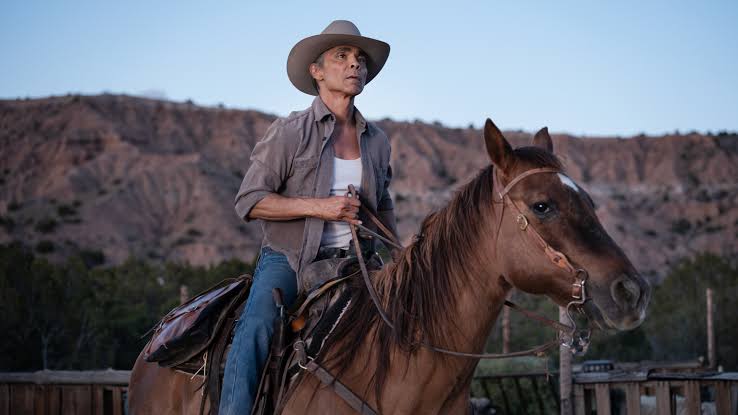
That is why the season’s premise feels heavier than a standard missing-person thriller. In many crime shows, a missing girl is a familiar plot type. In Dark Winds, the question of who searches, who listens, who has authority, and who receives urgency becomes part of the moral structure.
This gives the season a harder edge than formula noir. The darkness is not only inside the killer. It is inside systems that make certain disappearances easier to ignore. That is also why the show’s Native-centered production and performances matter. The story has to be told with a level of specificity that resists exploitation.
Noir, at its best, exposes what polite systems conceal. Dark Winds does that by making disappearance a test of community responsibility and institutional failure. The case is urgent because a life is at stake, but it is also urgent because the response itself reveals what America has failed to protect.
How Dark Winds Turns Adaptation Into Cultural Reframing
Tony Hillerman’s Leaphorn & Chee novels created one of American crime fiction’s most recognizable Southwestern detective worlds. Dark Winds adapts that legacy while shifting authorship, tone, and visual perspective for television. The result is not a simple page-to-screen transfer. It is a cultural reframing.
AMC’s renewal and series materials have repeatedly identified the show as a noir drama, while also highlighting the creative involvement of McClarnon, Chris Eyre, Tina Elmo, Anne Hillerman, and executive producers such as Redford and Martin. That combination is important because Dark Winds carries literary history, television prestige, and Native creative participation at the same time.
Season 4’s broader streaming life on Netflix may introduce viewers to the Hillerman world through the show first. That can be powerful if audiences understand that the series is not just adapting mystery plots. It is adapting a way of seeing crime through land, language, ceremony, jurisdiction, memory, and historical pressure.
This is why calling Dark Winds “Navajo noir” is not only a marketing phrase. It names a genre shift. The show takes noir’s familiar elements—murder, guilt, investigation, moral compromise, haunted detectives—and grounds them in a Native American context where the stakes are not borrowed from urban cynicism but produced by the landscape and history of the Southwest.
Why Dark Winds Still Feels Like America’s Sharpest Crime Import
Dark Winds feels like an import because it refuses the default American crime-show map. It does not center New York police, Los Angeles detectives, Boston criminals, Washington conspiracies, or Chicago corruption. It centers Navajo Tribal Police, the Four Corners, reservation life, 1970s America, and the specific political and spiritual realities that many crime shows treat as peripheral.
That is exactly why it feels sharp. Viewers are not just getting a mystery. They are being asked to adjust their sense of what American noir can look like. The show’s power comes from making the familiar strange and the ignored central. A desert road becomes as tense as a city alley. A family silence becomes as important as a confession. A jurisdictional gap becomes as dangerous as a gun.
Netflix’s July 2026 arrival gives Season 4 a chance to function as both continuation and rediscovery. Existing fans can revisit the case. New viewers can enter a crime world that feels more specific, more politically charged, and more spiritually textured than the average streaming thriller.
For Noir Whale readers, the lesson is clear. The future of American noir does not depend on finding new shadows in the same old cities. It depends on recognizing where the genre’s shadows have always existed but were rarely centered. Dark Winds Season 4 proves that Navajo noir is not a niche variation. It is one of the strongest crime languages television has.