

The Incident at Galley House turns detective work into an act of haunting. Released on Steam in July 2026, the deduction mystery from William Rous and Evil Trout Inc. reimagines Rous’s earlier text-based browser game Type Help as a fuller visual novel-style experience with 2D illustrations, voice acting, an eerie soundtrack, and a strange 3D interface for navigating memories. The premise is simple enough to feel classic: in 1936, something terrible happened at Galley House, and decades later the player gains access to a machine that can listen in on echoes of the past. The result is not traditional noir with a trench-coated investigator and a city full of smoke. It is video game noir rebuilt around memory, deduction, family secrets, and the unsettling idea that the past is still speaking if the player knows how to listen.
Why Galley House Feels Like Noir Without Needing A City
Noir has always depended on the past refusing to stay buried. In older film noir, that past might be a murder, an affair, a war wound, a debt, or a corrupt bargain that returns through a detective’s case. The Incident at Galley House uses the same emotional machinery, but replaces the city with a single haunted location and replaces the private eye with a player working through recovered memory.
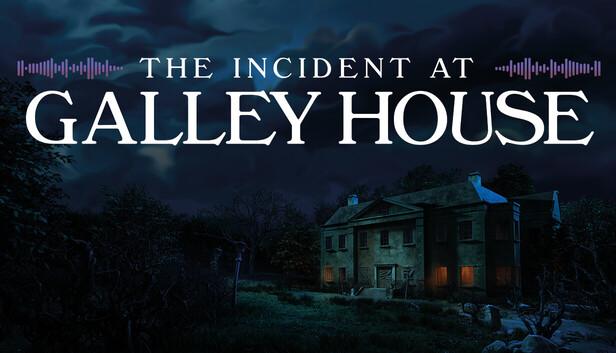
The official Steam page describes the game as a reimagining of Type Help, built by the creators of The Roottrees Are Dead. Its central hook is a peculiar machine that allows the player to listen to echoes of the past and piece together the truth behind the incident at Galley House. That is already close to noir’s oldest promise: the truth exists, but it is fragmented, hidden, and morally expensive.
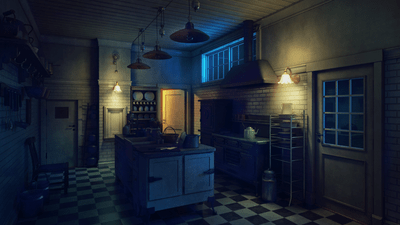
The difference is that Galley House does not need alleys, nightclubs, corrupt cops, or a neon skyline. It creates noir through investigation itself. The player enters a dead event and has to reconstruct what happened from voices, images, memories, contradictions, and names. A locked-room mystery becomes a psychological environment. The house is not only a setting. It is an archive of damage.
That makes the game a strong fit for Noir Whale’s recurring interest in video game noir aesthetics, where atmosphere becomes interactive rather than simply cinematic. Galley House pushes that idea further. The player is not walking through noir streets. The player is walking through evidence.
How A 1936 Mystery Becomes A Memory Machine
The game’s 1936 setup gives The Incident at Galley House a period-mystery charge without turning it into nostalgia cosplay. Adventure Game Hotspot’s earlier preview noted that, in March 1936, a group of people made their way up the muddy track to Galley House, believed abandoned for decades. That image is important because it gives the mystery an old-world texture: a remote house, a group gathered in one place, and a disaster that no one fully understood.
The Steam version updates that premise through the memory interface. Instead of simply reading documents or choosing dialogue, the player navigates echoes of the past. That structure changes the detective role. The investigator is not chasing a suspect in real time. The investigator is sorting through a recorded wound.
Memory-based detective games are powerful because they turn investigation into interpretation. A clue is not always an object. It may be a relationship, a voice, a repeated phrase, a location inside a remembered scene, or a contradiction between what someone says and what the structure of the memory reveals. The player becomes less like a cop and more like an editor of reality, trying to assemble a coherent story from broken fragments.
That is why Galley House belongs in the noir conversation. Noir has always been suspicious of official stories. Here, the official story may not even exist anymore. The player is left with echoes, and echoes are never neutral. They preserve something, but they also distort it.
Why The Game’s Browser Origins Make Its Steam Version More Interesting
The Incident at Galley House did not emerge from nowhere. PC Gamer reported on July 16, 2026, that the game began as Type Help, a purely text-based mystery by William Rous, before being rebuilt for Steam through a collaboration involving Evil Trout and Jeremy Johnston. That development path matters because it shows how modern detective games are growing from small, interface-driven experiments into fuller commercial releases without losing their deduction-first identity.
The same PC Gamer report noted that Galley House reached more than 600 Steam reviews with a 97% positive rating just two days after release. That early reception matters for an article about trend, not hype. It shows that a meaningful audience exists for detective games built around reasoning instead of combat, memory instead of open-world traversal, and reconstruction instead of reflex.
The connection to The Roottrees Are Dead is also important. Evil Trout’s earlier commercial update of that genealogical mystery helped prove that players would show up for dense, research-heavy deduction games. Galley House extends that model but makes the emotional terrain stranger. Instead of piecing together a family tree through old internet searches, players are navigating a ghostly event through mediated memory.
That is the new video game noir lane: not a shooter with a dark voiceover, but a puzzle of people, motives, documents, timelines, and withheld truth.
Why Deduction Games Are Replacing Gunplay With Suspicion
Many classic video game noir titles use violence as the main form of agency. A player investigates, but sooner or later the gun comes out. That can work, especially in hardboiled action games, but it also narrows what noir can become. The Incident at Galley House suggests another direction: noir as sustained suspicion.
In a deduction game, the player’s power comes from attention. Names matter. Rooms matter. Timelines matter. Objects matter. The order of discovery matters. A wrong assumption can be as dangerous as missing a shot in an action game, because the player’s understanding of the whole case can collapse.
That is why the memory interface is more than a visual gimmick. It creates a playable version of noir uncertainty. The player sees something that happened, but seeing is not the same as understanding. The machine gives access to the past, but it does not automatically explain the past. The player still has to decide what matters.
This design makes Galley House part of a broader detective-game movement inspired by titles such as Return of the Obra Dinn, Her Story, and The Roottrees Are Dead. These games share a crucial noir principle: truth is not handed to the protagonist by authority. It is assembled by the investigator through labor, doubt, and pattern recognition.
How Galley House Turns A Locked-Room Mystery Into Ghost Story Noir
GameSpew’s July 2026 review described The Incident at Galley House as a locked-room whodunnit with a twist, centered on a terrible night in the 1930s when a house full of people mysteriously died. That locked-room structure is useful because it gives the game a classical murder-mystery skeleton. The twist is that the method of investigation makes the whole thing feel spectral.
A locked-room mystery usually depends on cleverness. How did someone enter? How did someone leave? What physical trick made the impossible possible? Galley House keeps that kind of curiosity, but adds a darker question: what does it mean to relive a dead night through a machine built to expose echoes?
That makes the house feel less like a puzzle box and more like a crime scene that never stopped happening. The player does not merely read about the past. The player revisits it, scans it, listens to it, and rearranges it. That process can make deduction feel invasive. The dead become sources. Their fears, arguments, choices, and secrets become material for the player’s reconstruction.
Noir is often about the cost of knowing. Galley House makes that cost interactive. Every solved fragment brings the player closer to truth, but also deeper into the emotional architecture of an event that should have stayed sealed.
Why Memory Navigation Is The New Detective Notebook
The most important modern detective-game shift is the move from clue collection to memory navigation. Old adventure games often asked players to find the right object, use it in the right place, and advance the plot. Newer deduction games increasingly ask players to manage information itself. The player must build a mental model of events.
The Incident at Galley House fits that shift because its 3D memory interface turns investigation into spatial reasoning. A memory is not only something remembered. It becomes a place the player can move through. That is a crucial video game contribution to noir. Film can show flashbacks. Games can make players interrogate them.
This changes the detective role in a way that feels especially current. The player is not simply asking witnesses questions. The player is studying fragments of recorded presence. That makes the game feel close to archive work, forensic media analysis, and ghost hunting at the same time.
For noir, that is valuable because memory has always been one of the genre’s darkest materials. People remember badly. People lie about what they remember. Trauma edits reality. Families agree on false histories. Institutions preserve the wrong documents. Galley House makes those noir concerns playable through its core interface.
Why The Game’s Early Reception Matters For Indie Noir
The strong early Steam response matters because it points toward a market for slower, smarter mystery games. PC Gamer’s report framed Galley House as part of a wave of detective games with ideas of their own, noting its overwhelming-positive Steam reception shortly after release. Polygon’s July 14 review also called it one of 2026’s strongest mystery games and emphasized its mix of deduction and ghost-story unease.
That reception is not only a commercial note. It suggests that players are increasingly willing to treat deduction as the main event. For years, many games used detective work as flavor around combat, exploration, or cinematic storytelling. Galley House belongs to a different tradition: the puzzle is the drama.
This is exactly where indie games can expand noir. Smaller studios do not need the scale of a crime city when they can build a dense information system. A single house, a dead night, and a memory machine can carry more noir pressure than a massive map full of empty alleys if the evidence is sharp enough.
Indie noir thrives when design constraint becomes style. Limited space creates intimacy. Limited information creates paranoia. Limited mechanics create focus. Galley House understands that the absence of action can become its own kind of tension.
How The Game Makes The Player Responsible For Meaning
One of the strongest things detective games can do is refuse to make the player only a passenger. A mystery film can guide the audience toward a reveal. A mystery game can make the audience responsible for earning it. The Incident at Galley House works because its design places interpretation directly on the player.
That responsibility changes the emotional weight of the story. When the player misreads a clue, the misunderstanding belongs to them. When the player finally connects two details, the revelation feels personal because it came through attention rather than exposition. That is the power of interactive noir: the player does not merely watch confusion. The player inhabits it.
This also makes the game different from many horror titles. Horror often frightens by taking control away. Galley House unsettles by giving control and asking whether the player can use it well. The machine reveals echoes, but the machine does not solve the case. The player has to become worthy of the evidence.
That is a strong noir idea. Truth is not a reward for being present. It is a burden earned through looking longer than comfort allows.
Why Memory-Based Detective Games Could Define The Next Video Game Noir
The Incident at Galley House shows why video game noir may be moving away from the old visual checklist. Rain, smoke, neon, trench coats, and cynical narration can still work, but the genre’s future may depend more on systems: how a player investigates, remembers, doubts, and reconstructs.
Memory-based detective games give noir a new structure because they make the past playable. They allow players to enter scenes that are already over, study the traces, and discover that truth is not static. It depends on perspective, sequence, and interpretation. That is more than a mechanic. It is a noir philosophy.
Galley House feels important because it understands that the detective story can become more powerful when it slows down. No gunfight can replace the dread of realizing that a tiny inconsistency changes everything. No chase scene can replace the moment when a dead event suddenly makes sense.
For Noir Whale readers, the game is worth watching because it expands what video game noir can be. It is not noir by costume. It is noir by method. It turns memory into a crime scene, deduction into atmosphere, and the player into a detective who must listen to the dead without pretending that listening is innocent.