

I Will Find You gives Netflix another Harlan Coben hit, but its real strength is not only the twist machinery. The eight-episode series premiered on June 18, 2026, with Sam Worthington starring as David Burroughs, a father serving life in prison for murdering his son, Matthew, even though he insists he did not commit the crime. When a photo suggests Matthew may still be alive, David’s wrongful conviction story turns into something darker and more intimate than a standard escape thriller. It becomes family noir: a crime story where the prison is legal, emotional, parental, and domestic all at once.
Why I Will Find You Became More Than Another Harlan Coben Twist Machine
Netflix’s official I Will Find You page positions the series as a new thriller based on Harlan Coben’s bestselling 2023 novel, with Sam Worthington, Britt Lower, and Milo Ventimiglia leading the cast. That foundation matters because Coben’s Netflix adaptations have become a recognizable streaming category: fast hooks, buried secrets, family betrayals, sudden reversals, and ordinary people forced into impossible decisions.
The difference with I Will Find You is the emotional starting point. David Burroughs is not a detective hired to solve someone else’s case. He is the accused father, the grieving parent, and the prisoner whose entire identity has been rewritten by a conviction. The story begins after the worst possible domestic horror has already been accepted by the legal system as fact. That makes the series less about discovering danger and more about escaping a false version of reality.
Netflix’s July 14 Top 10 report said I Will Find You topped the English TV list for a fourth consecutive week, earning 11.5 million views for the week of July 6. That performance shows the series is not only another Coben title inside Netflix’s catalog. It is one of the platform’s clearest 2026 examples of how family trauma, wrongful conviction, and serialized suspense can still pull a large streaming audience when the emotional premise is simple and brutal: what if the child you were convicted of killing is alive?
How Wrongful Conviction Creates A Noir Trap
Wrongful conviction is powerful noir material because it turns the justice system into a hostile architecture. In a classic noir, a character may be trapped by a corrupt city, a femme fatale, a police frame-up, a debt, or a bad choice made years earlier. In I Will Find You, David is trapped by a legal narrative that has already decided who he is.
The prison is physical, but the deeper prison is symbolic. David has been cast as the father who killed his son. That identity follows him even before he escapes. The plot can move through chase scenes, FBI pressure, and hidden evidence, but the noir pressure comes from something more permanent: every person who believes the conviction has already helped bury him alive.
That is why the series connects naturally with Noir Whale’s earlier Netflix thriller noir analysis, where the crime itself becomes less important than the psychological wreckage it creates. I Will Find You follows that pattern. The mystery is urgent, but the emotional collapse has been happening for years.
Noir works best when innocence does not guarantee safety. David may be innocent of Matthew’s murder, but innocence does not unlock his cell, restore his family, or erase public belief. The story’s central cruelty is that the truth has to fight against a completed social and legal conclusion.
Why Sam Worthington Makes David Burroughs Feel Like A Broken Noir Father
Sam Worthington’s casting gives the series a heavy, physical center. Netflix’s cast guide describes David Burroughs as a father in the darkest place imaginable, imprisoned for the murder of his son while still insisting he is innocent. Worthington has often played men defined by endurance, survival, and suppressed feeling, and that works for David because the character cannot be too polished.
A family-noir protagonist is different from a traditional private eye. He is not emotionally protected by cynicism. He has already lost the child, the marriage, the public image, and the ordinary future. The photo suggesting Matthew may be alive does not simply reopen the case. It reopens fatherhood.
That is the show’s strongest emotional hook. David does not escape prison because he wants revenge in the abstract. He escapes because the possibility that his son lives makes inaction unbearable. That distinction matters. A revenge thriller can flatten grief into action. Family noir keeps grief alive inside the action.
Worthington’s David is compelling because his mission is both heroic and reckless. Escaping prison may be the only way to pursue the truth, but it also makes him look guiltier to the world that already condemned him. Noir thrives in that kind of bind. The right move can still destroy the person making it.
How Britt Lower’s Rachel Turns Evidence Into Emotional Dynamite
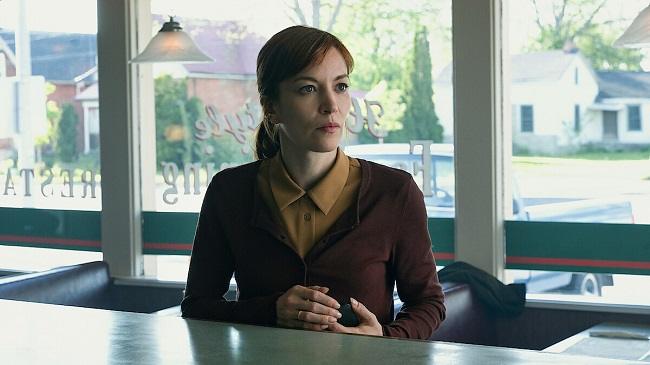
Britt Lower plays Rachel Mills, David’s former sister-in-law and the person who brings him the photo that suggests Matthew may still be alive. In many thrillers, a photo is a plot device. In I Will Find You, it is emotional dynamite. It detonates the story because it gives David something worse than hope: proof that his accepted reality may be a lie.
Rachel’s role is important because she stands between family memory and investigative momentum. She is not an anonymous messenger. Her connection to David’s family makes the evidence more intimate. She has her own relationship to the loss, the conviction, and the people damaged by both. When she brings the image to David, she is not only giving him a clue. She is forcing everyone connected to Matthew to reconsider the last several years of their lives.
This is where the series becomes family noir instead of only wrongful-conviction thriller. The evidence does not move through a clean procedural channel. It moves through grief, suspicion, loyalty, guilt, and old family fault lines. Rachel’s choice creates a new moral problem: if David was innocent, then the family’s accepted history is built on a lie. If Matthew is alive, then grief itself has been misdirected.
Lower’s presence gives those questions restraint. She can play intelligence without turning Rachel into a genre function. That helps the show keep the emotional cost of the twist visible.
Why Milo Ventimiglia Adds Another Layer Of Domestic Suspicion
Milo Ventimiglia’s presence in the ensemble gives I Will Find You another useful layer because he brings audience memory from family dramas into a thriller about parenthood, deception, and hidden identity. Netflix’s official materials place him alongside Worthington and Lower as one of the key cast members, and his casting helps the show blur the line between domestic drama and crime suspense.

That blur is important. Harlan Coben adaptations often work because they begin in recognizable domestic spaces: homes, marriages, friendships, parent-child relationships, school communities, and old romantic ties. The shocking crimes land harder because they rupture places the audience expects to be emotionally safe.
Family noir depends on that rupture. A prison break may provide momentum, but the story’s deeper tension comes from the collapse of domestic certainty. Who lied? Who knew? Who benefited from David’s conviction? Who built a life on the assumption that Matthew was dead? The more family-centered the mystery becomes, the more every revelation hurts.
Ventimiglia’s role adds to that instability because the audience is trained to read him through trust, warmth, and emotional intensity. In a Coben thriller, those qualities can become misleading. The cast’s familiarity becomes part of the suspense machine.
How Netflix Turned The Harlan Coben Brand Into A Streaming Habit
Netflix’s partnership with Harlan Coben has become one of the streamer’s most reliable thriller engines. Decider’s recent roundup noted that Coben’s Netflix collection has grown into a deep catalog of twist-heavy series, with I Will Find You standing out among the newest and most popular entries. The pattern is easy to understand: Coben stories are built for bingeable suspicion, but they also work as weekly conversation pieces because each episode can end with a new piece of the truth collapsing.
I Will Find You demonstrates why that formula still works. It has a clean hook, a moral injustice, a personal mission, and a question that almost every viewer can understand instantly. David’s son may be alive. David is in prison for killing him. The only way forward is to break the story open.
Yet the series’ Netflix success also shows that audiences are not simply chasing twists. The July Top 10 data matters because a show does not hold the No. 1 English TV spot for four weeks on mechanism alone. Viewers stayed because the mystery is attached to parental grief. The plot gives the audience momentum; the father-son premise gives it weight.
That is where I Will Find You fits modern streaming noir. The platform has turned thrillers into global comfort viewing, but the best ones still need discomfort at the center. This show’s discomfort is the idea that the wrong story can become legally permanent.
Why Family Noir Feels Sharper Than Standard Prison-Break Drama
A prison-break drama usually asks whether the escapee can avoid capture. I Will Find You asks a harder question: can a father escape the role the world assigned him? David’s physical escape is only the first part of the story. The real escape would be from the identity of murderer, failed father, and ruined husband.
That is why family noir can feel sharper than a standard chase story. The police pursuit is visible, but the family wound is everywhere. David cannot simply run from prison to freedom. He has to run through the evidence, the grief, the people who stopped believing him, and the possibility that Matthew’s survival may reveal an even darker conspiracy.
Noir has always understood that the past is not finished just because people agree on an explanation. A closed case can still be rotten. A conviction can be wrong. A family can keep living inside a false history. I Will Find You uses that noir principle in domestic form.
The title itself becomes a promise with several meanings. David is trying to find Matthew. He is also trying to find the truth, the real killer, and some remaining version of himself that was not erased by conviction. The show’s emotional force comes from the fact that those searches may not lead to the same place.
How The Series Uses Hope Without Escaping Noir
Harlan Coben thrillers often carry hope inside their darkness. That can make them different from more fatalistic noir traditions, where truth arrives too late to save anyone. I Will Find You uses hope as propulsion. The photo gives David a reason to move. The possibility of Matthew’s survival turns grief into action.
But hope does not make the story less noir. It makes the noir more painful. The danger of hope is that it can become another trap. If David is wrong, he has destroyed his last remaining stability for nothing. If he is right, then the world’s cruelty is larger than he understood. Either way, the past gets worse before it can get better.
That tension is why the series works as family noir. It refuses the clean emotional divide between despair and optimism. David’s hope is desperate, illegal, morally urgent, and possibly self-destructive. He is not calmly reopening a case. He is tearing his life apart because the alternative is accepting a lie that killed him socially before his body ever died.
This is the kind of noir Netflix has become especially good at packaging: emotionally direct, structurally twisty, and built around a protagonist whose private wound becomes the audience’s entry point into a larger conspiracy.
Why I Will Find You Matters For Netflix’s 2026 Thriller Wave
I Will Find You matters in 2026 because it shows that Netflix’s thriller machine is strongest when it turns crime into emotional architecture. The show is not only about whether David can prove he did not kill Matthew. It is about how a family, a legal system, and a public record can all collaborate in a false reality once the wrong story hardens.
That is why the series belongs in Noir Whale’s conversation about modern noir. The shadows are not only in alleys or interrogation rooms. They are in court records, family photographs, prison routines, grief rituals, and the silence that follows a verdict. David’s nightmare is not that nobody knows the truth. It is that everyone thinks they already do.
The show’s hit status reinforces the appetite for that kind of story. Viewers are still drawn to crime thrillers, but the strongest ones now build their darkness around family systems, not only criminal systems. A father’s love becomes motive. A child’s absence becomes evidence. A photograph becomes a weapon against reality.
For noirwhale.com readers, I Will Find You is useful because it proves that family noir can turn a familiar Netflix thriller into something more resonant. The case may twist. The conspiracy may expand. The chase may accelerate. But the deepest question remains painfully simple: if the family story was wrong, what else in David’s life was never true?